Recent Posts
Landscape Post-Processing: Two Takes on One Bridge
The Brooklyn Bridge is a landscape whether we admit it or not, a man-made one, but still shaped by light, weather, scale, and time. Standing on Old Fulton Street, the raw capture comes first, and it does its job well. The sky is clean and blue, the stone towers are pale and accurate, the steel cables stretch across the frame with technical precision. Everything is readable, factual, and balanced. This is the camera doing what it’s designed to do: record information.
read more
Night photography really begins in that fragile momen
Night photography really begins in that fragile moment when the sun hasn’t fully left yet, and this image lives exactly there. The sky is still holding onto its last warmth, a deep gradient that slips from burning orange near the horizon into a bruised purple higher up, like the day is reluctant to let go. Below it, the sea is already darker, textured by soft, repetitive waves that catch just enough leftover light to shimmer faintly.
read more
Chinatown, New York: A Photowalk Where the Street Shoots Back
I came to Chinatown with a camera and no plan, which is usually the only plan that works here. The street in front of me opened like a narrow canyon of brick and signage, the buildings tall enough to squeeze the sky into a pale strip overhead. Fire escapes crisscrossed the façades in black metal diagonals, ladders folded up like punctuation marks, while strings of bare bulbs stretched from side to side, unlit for now but already sketching the night that would come later.
read more
How People-Centered Images Define Tech Coverage: Photographing People at Tech Events
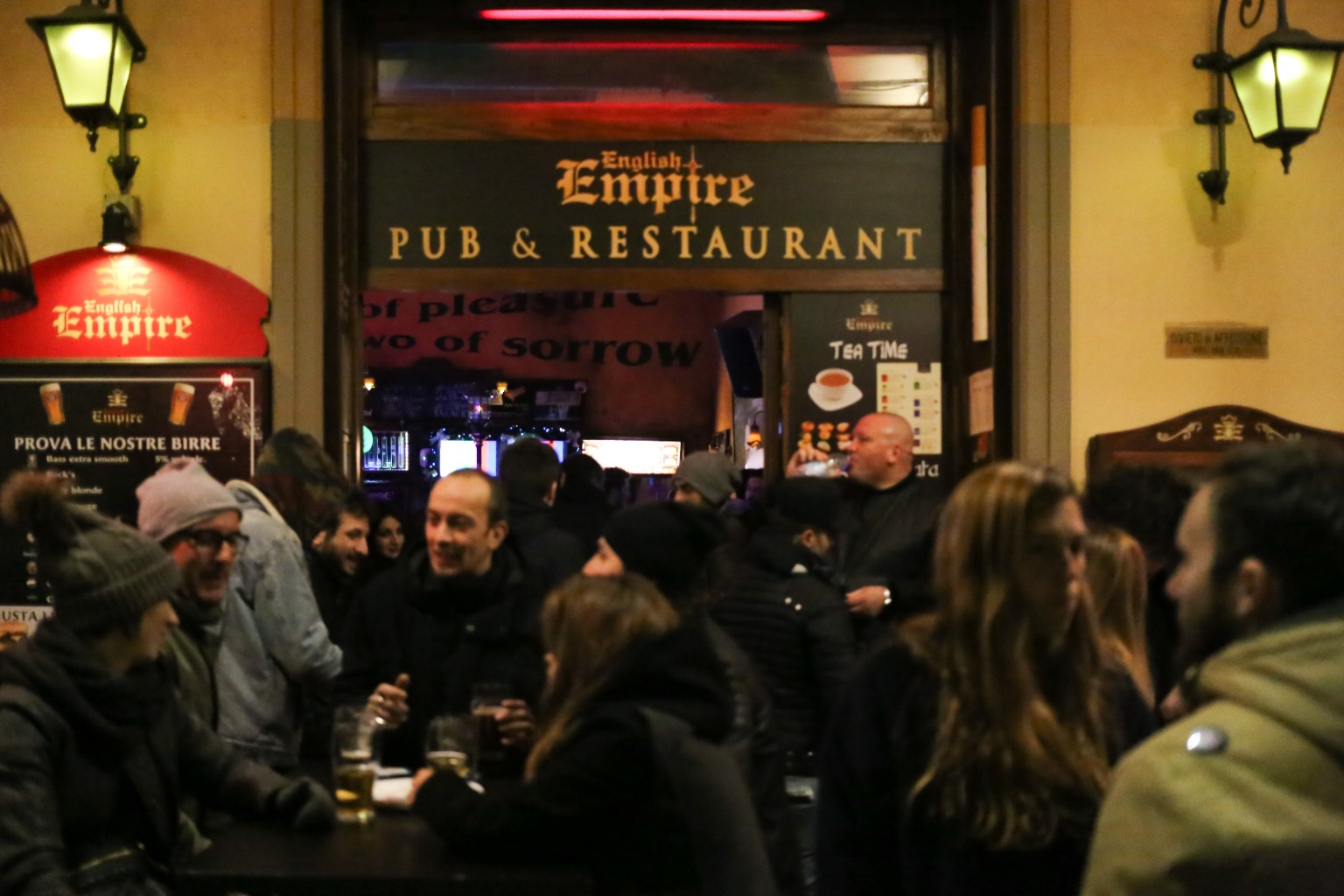
Tech events are usually described in terms of scale, innovation, product launches, big screens, louder slogans. From a photographer’s point of view, though, that surface layer fades fast. What actually carries the story is quieter and more human, and often happens half a step away from the stage lights. The image here comes from a busy exhibition floor, the kind where conversations overlap and attention is constantly pulled in different directions.
read more
Bird Photography on a Budget, Canon RF 100–400mm f/5.6–8 IS USM in the Real World
Bird photography has a reputation for being gear-hungry, almost elitist, as if meaningful images only happen beyond the 500mm mark with lenses that cost more than a small car. The Canon RF 100–400mm f/5.6–8 IS USM quietly pushes back against that idea. This image of urban parakeets after rain is a good example of what affordable reach can actually deliver when expectations are realistic and observation matters more than specs. From a respectful distance, the lens allows you to frame behavior rather than just presence, isolating the birds against a pale winter sky while keeping the scene calm and undisturbed.
read more
How Is a Lens f-Number Affected by Crop Factor?
Crop factor doesn’t actually change the physical f-number of a lens, but it absolutely changes how that f-number behaves in practice, and that’s where people get tripped up a bit.
The f-number itself is purely optical. It’s defined as the focal length divided by the diameter of the entrance pupil. So if you mount a 50mm f/2 lens on a full-frame camera and then mount that exact same lens on an APS-C body, it is still a 50mm f/2 lens.
read more
The Canon EOS R5 Is Gone From the Lineup, but Not From the Conversation
At some point, every camera slips out of the catalog without asking permission. One day it’s a default option, a familiar benchmark, and the next it’s simply no longer being made. That’s where the Canon EOS R5 now sits. Officially discontinued. No ceremony, no nostalgia marketing, just a factual shift in Canon’s production reality. And yet the R5 doesn’t feel like a camera that belongs to the past tense. If anything, it still feels oddly contemporary, like a machine that exited the stage before the audience was finished looking at it.
read more
Canon Unveils RF7–14mm F2.8–3.5 L Fisheye and RF14mm F1.4 L VCM, Pushing Ultra-Wide RF Optics to New Extremes
Canon U.S.A., Inc. is clearly in a mood to remind everyone that ultra-wide is not a niche, it’s a language, and this latest RF-mount announcement leans hard into that idea. Two very different lenses arrive together, but they feel deliberately paired: one embraces distortion and spectacle without apology, the other chases purity, speed, and control at the extreme wide end. Both extend Canon’s RF ecosystem in directions that feel very deliberate if you’ve been watching how hybrid shooters, VR creators, and astro photographers are actually working right now.
read more
200mm Compression Study: How Distance Turns a City into Geometry
This photograph is the kind that only really makes sense when you’ve spent a bit too much time thinking about focal lengths, compression, and why 200mm is such a strangely addictive number. Shot with the Canon EF 200mm f/2.8L II USM, the image pulls Manhattan’s skyline tight, stacking decades of architecture into a single dense plane where old limestone crowns press against glassy new towers, all of it hovering above that long, stubborn band of brick housing blocks along the river.
read more
CP+ Camera & Photo Imaging Show 2026, February 26–March 1, Yokohama
Every February, Yokohama quietly turns into the center of gravity for the global imaging world, and in 2026 it will happen again when the CP+ Camera & Photo Imaging Show opens its doors at Pacifico Yokohama from Thursday, February 26 through Sunday, March 1. CP+ is not just another camera fair, it’s one of those rare events where the entire ecosystem of photography and imaging technology gathers in one place, from the biggest Japanese manufacturers to niche accessory makers, software companies, printers, and experimental imaging startups.
read more