200mm Compression Study: How Distance Turns a City into Geometry
This photograph is the kind that only really makes sense when you’ve spent a bit too much time thinking about focal lengths, compression, and why 200mm is such a strangely addictive number. Shot with the Canon EF 200mm f/2.8L II USM, the image pulls Manhattan’s skyline tight, stacking decades of architecture into a single dense plane where old limestone crowns press against glassy new towers, all of it hovering above that long, stubborn band of brick housing blocks along the river. The telephoto compression is doing most of the storytelling here, collapsing physical distance into visual proximity, forcing buildings that in real life are blocks apart to lean into each other like they’re sharing secrets. From this distance the skyline stops being a postcard and turns into a diagram, almost an architectural cross-section of ambition, money, and time.
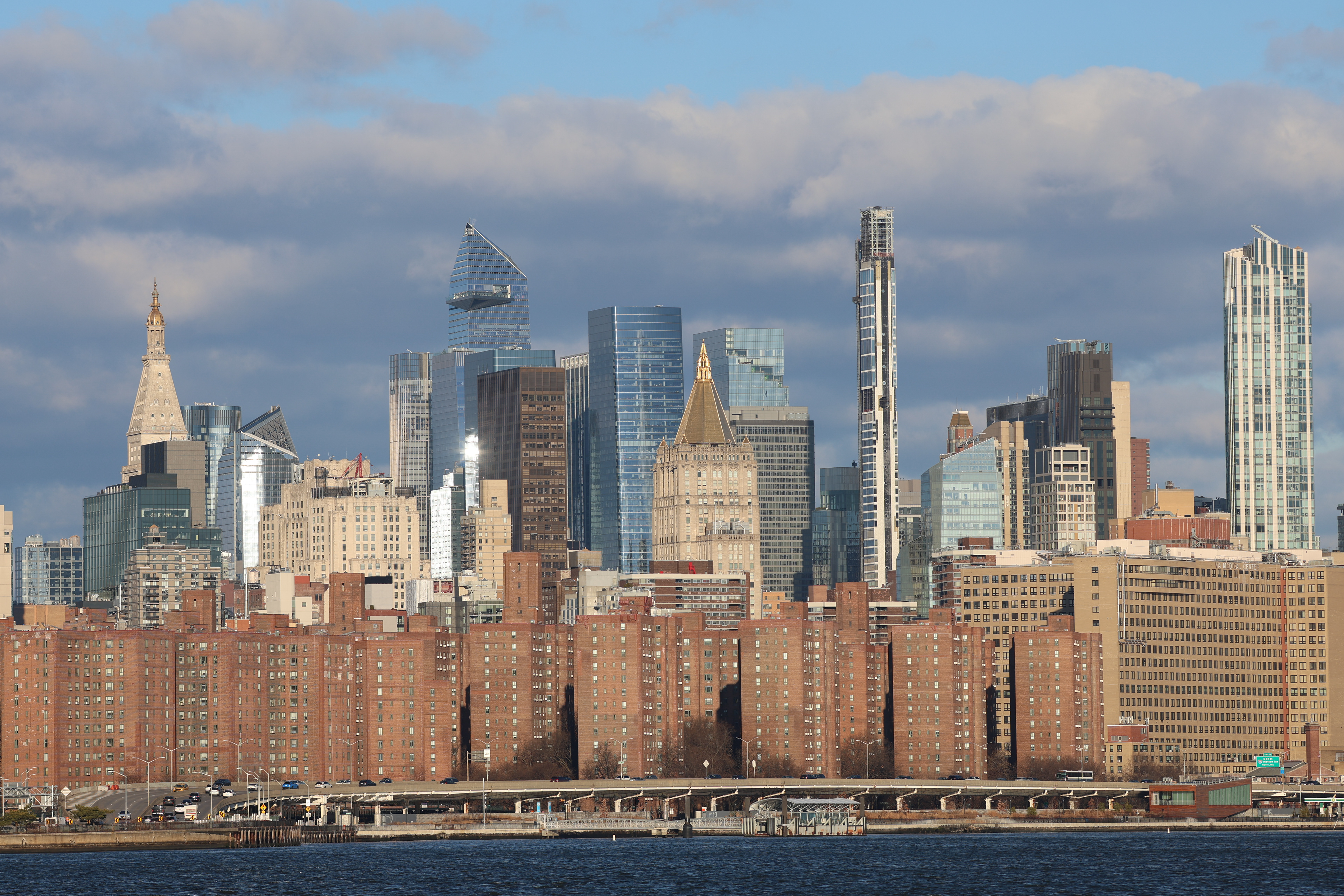
Technically, the lens behaves exactly as I expect and exactly as I love. At 200mm, even at a moderate aperture, micro-contrast becomes a thing you start to notice in odd places, like the way sunlight reflects differently off glass versus stone, or how the older façades absorb light instead of throwing it back at you. The EF 200mm f/2.8L II is brutally honest in that sense; it doesn’t soften or romanticize the scene, it just resolves. Edge-to-edge sharpness is there without drama, and the USM autofocus snaps into place with that quiet confidence that makes you forget about it entirely, which is usually the highest compliment I can give. I’m always a little obsessed with how atmospheric haze behaves at this focal length, and here it’s just enough to separate layers without washing them out, creating a natural depth cue even though everything feels pressed together.
What really holds my attention, though, is the light. Winter light in New York is clean, slightly cold, and very directional, and at 200mm it becomes almost sculptural. You can see exactly which towers caught the sun first, which are still half asleep in shadow, and which reflect light back into the frame like accidental fill lights. The clouds sit low and heavy, acting like a giant softbox that flattens the sky but amplifies contrast in the buildings. I didn’t need to fight dynamic range here, just respect it, expose carefully for the highlights, and let the shadows keep their weight. This is one of those scenes where the lens, the distance, and the season all agree with each other, and when that happens I stop chasing the shot and just let the frame settle. That’s usually when I know I’ve got it.