Reading the Scene Before Pressing the Shutter
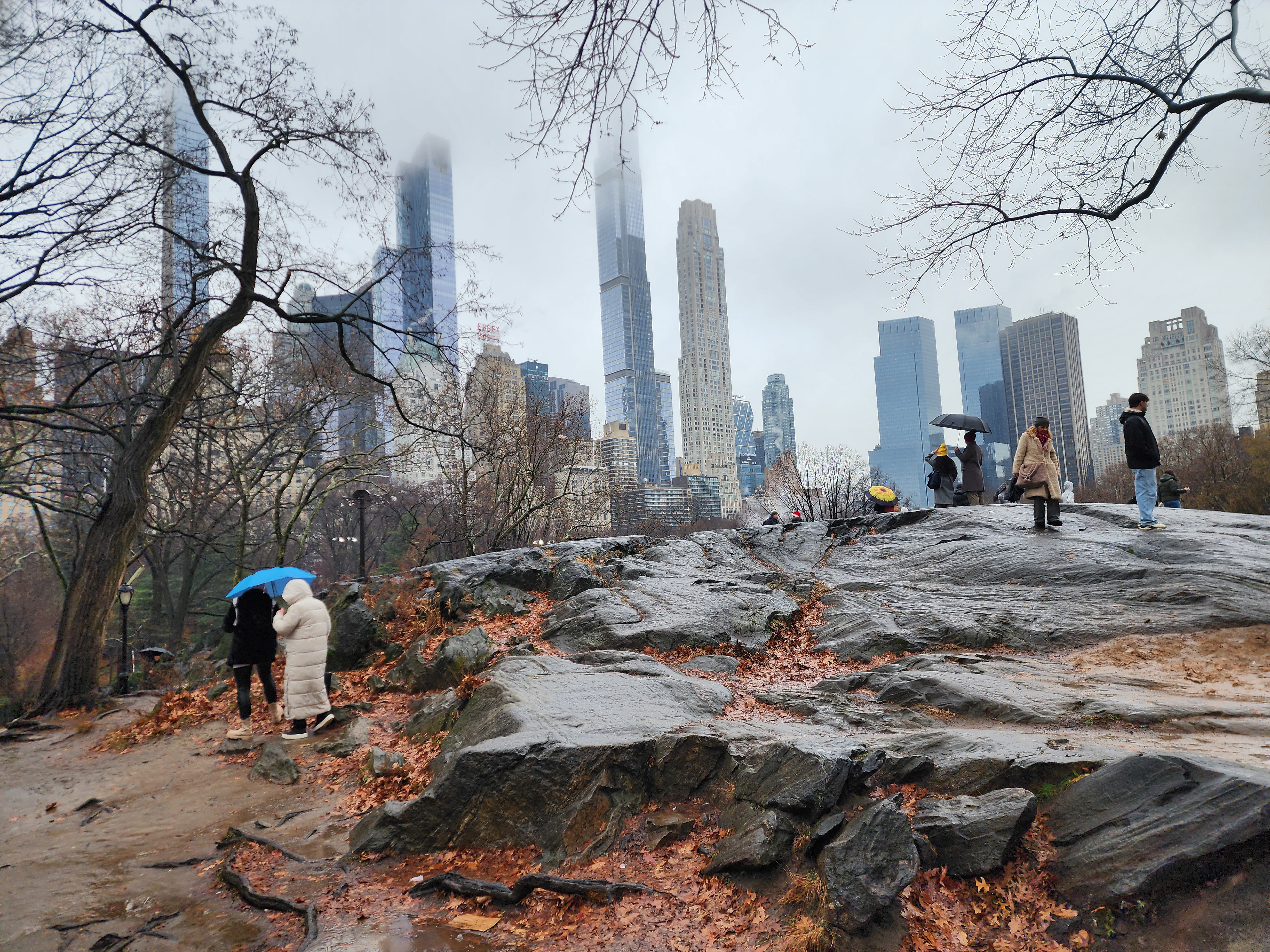
This is the kind of place where photography becomes less about hunting and more about listening, and you feel it the moment you step onto the rock. The surface is slick, uneven, reflective in small unpredictable patches, forcing you to slow your stance, and that physical hesitation feeds directly into how you see. The light is flat, overcast, almost blank, but not empty — it’s soft enough to erase harsh edges and pull everything into the same quiet tone, which means composition suddenly matters more than light itself. I found myself working the frame slowly, letting the skyline hover in the background like a ghosted layer, using the bare branches as natural leading lines and the people with umbrellas as scale markers, not subjects. The trick here is resisting the urge to isolate — this scene wants depth, layers, and patience. Foreground rock, mid-ground figures, background towers dissolving into fog, all stacked like transparencies. Even color becomes a technical choice: the muted palette makes every small accent count, so a blue umbrella or a yellow hat turns into a visual anchor whether you plan it or not. On a walk like this, the camera becomes a measuring tool more than a weapon, checking balance, weight, and timing, and the best frames come when you stop moving, plant your feet, and wait for the city to breathe into the image on its own.