Bird Photography on a Budget, Canon RF 100–400mm f/5.6–8 IS USM in the Real World
Bird photography has a reputation for being gear-hungry, almost elitist, as if meaningful images only happen beyond the 500mm mark with lenses that cost more than a small car. The Canon RF 100–400mm f/5.6–8 IS USM quietly pushes back against that idea. This image of urban parakeets after rain is a good example of what affordable reach can actually deliver when expectations are realistic and observation matters more than specs. From a respectful distance, the lens allows you to frame behavior rather than just presence, isolating the birds against a pale winter sky while keeping the scene calm and undisturbed. Nothing about this feels rushed or aggressive, which is often exactly what bird photography needs.
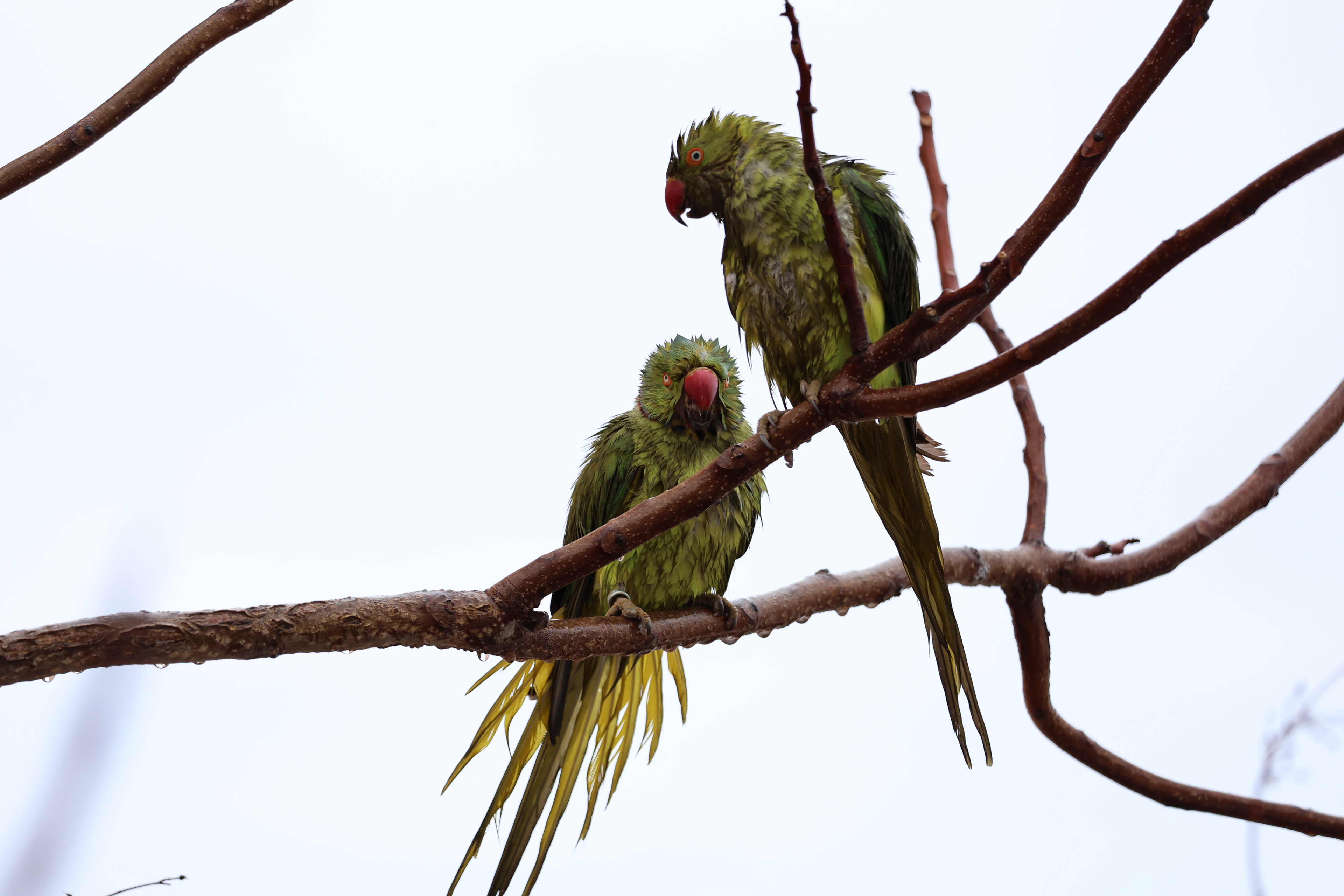
The slower aperture is often the first thing people fixate on, but in practice it shapes how you shoot in a productive way. At f/8, you’re not chasing ultra-thin depth of field or artificial separation; instead, you rely on focal length compression, clean backgrounds, and timing. In this frame, both birds remain sharp, their soaked feathers rendered with texture and honesty, while the background stays soft simply because of distance and framing. For perched birds, urban wildlife, and moments of stillness rather than flight, the lens feels more than adequate. It rewards patience and positioning instead of brute force optics.
What makes the RF 100–400mm particularly well suited for bird photography is how approachable it is. It’s light enough to carry without planning your entire day around it, which means it actually ends up on the camera when birds appear unexpectedly. The image stabilization helps in exactly the conditions bird photographers often work in—overcast skies, early mornings, post-rain light—where shutter speeds dip and handheld shooting becomes a necessity rather than a choice. The lens doesn’t fight you. It stays responsive, quiet, and predictable, which matters far more than maximum aperture when you’re waiting for subtle changes in posture or expression.
This kind of lens shifts bird photography away from obsession and toward attentiveness. Instead of chasing rare species or dramatic action, it encourages you to notice what’s already around you: city parakeets, backyard visitors, birds resting after weather passes through. The Canon RF 100–400mm f/5.6–8 IS USM won’t turn every frame into spectacle, but it consistently delivers honest, usable images without demanding excess. For photographers who want to explore birds seriously without turning gear into a barrier, that balance is exactly the point.