Chinatown, New York: A Photowalk Where the Street Shoots Back
I came to Chinatown with a camera and no plan, which is usually the only plan that works here. The street in front of me opened like a narrow canyon of brick and signage, the buildings tall enough to squeeze the sky into a pale strip overhead. Fire escapes crisscrossed the façades in black metal diagonals, ladders folded up like punctuation marks, while strings of bare bulbs stretched from side to side, unlit for now but already sketching the night that would come later. The light was soft, overcast, forgiving in that way New York sometimes is, flattening contrast just enough to let color do the talking.
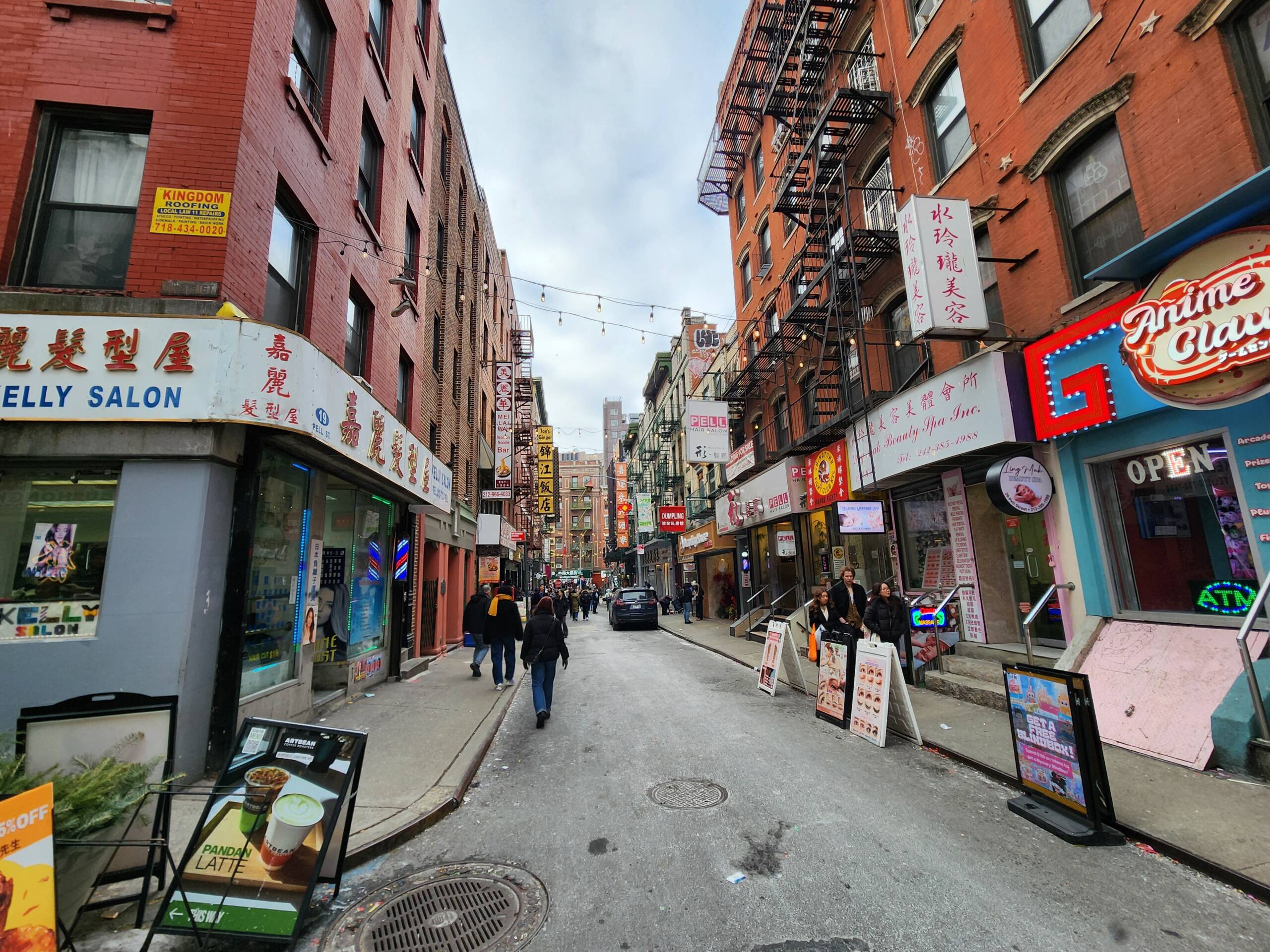
From a photographer’s point of view, this street is generous but demanding. Shop signs stack vertically, Chinese characters layered one above another, some glowing clean and sharp, others faded, chipped, or half-dead, still stubbornly hanging on. English words appear where necessary, never dominant. A hair salon spills neon into the sidewalk, a bubble tea poster leans against a wall, menu boards stand like sentries outside restaurants, their photos glossy and unapologetic. Everything wants to be in the frame at once. The trick is deciding what to leave out, which is harder than finding something to shoot.
People move through the scene with practiced confidence. Locals walk straight down the center of the street as if cars are a suggestion, not a rule. Tourists hesitate near doorways, phones half-raised, unsure whether to commit. A small group pauses by a menu board, pointing, debating, blocking the sidewalk without realizing it. I wait, finger on the shutter, because Chinatown teaches patience fast. Moments here don’t announce themselves; they slide into place quietly. A turn of the head, a shared laugh, a delivery van creeping forward just enough to compress the scene, and suddenly the frame locks.
What I love photographing here is the density. Nothing is isolated. A single image can hold three stories if you let it. In this shot, the storefronts press in close, windows reflecting other windows, layers of commerce stacked into a visual rhythm. The street surface is imperfect, patched asphalt and manhole covers, scuffed and stained, catching reflections from signs and passing shoes. Even the mess has structure. It’s urban texture at its most honest, and it rewards wide lenses that don’t flinch.
As I walk deeper into Chinatown, I stop thinking about individual photos and start thinking in sequences. This neighborhood doesn’t resolve itself in a single frame. You need repetition, variations on the same motifs: signs, stairs, faces, food, movement. I shoot storefronts head-on, then immediately turn and shoot over my shoulder, because Chinatown looks different depending on which direction you face. The street rearranges itself constantly. What was clutter becomes pattern. What looked chaotic suddenly feels composed.
There’s also a soundscape that sneaks into the photographs even though it shouldn’t. You can almost hear this image: snippets of conversation in Cantonese and Mandarin, a shop door slamming shut, the whirr of an ATM inside a brightly lit arcade storefront, footsteps echoing between brick walls. As a photographer, you start timing shots to sounds, not just gestures. You anticipate movement by listening, which feels old-school and strangely grounding.
By the end of the walk, my memory card is fuller than I expected, but more importantly, my eyes feel recalibrated. Chinatown does that. It resets your sense of scale, pace, and attention. You don’t leave with one perfect image; you leave with a body of work that feels lived-in, slightly messy, undeniably real. It’s a place where the street doesn’t care that you’re photographing it, and somehow that makes every frame better.