Canon R100 + RF 100–400mm, A Budget Combo That Reaches 1.5 Kilometers Into the Night
This frame feels like a small technical miracle dressed up as a night harbor scene. What you’re looking at is a dense stack of containers aboard an MSC ship, cranes rising behind it like angular skeletons, all lit by a patchwork of industrial sodium and LED light that spills onto the water in broken gold and silver reflections. The ship’s hull cuts across the frame with real authority, that massive MSC lettering acting almost like an anchor for the eye, while below it a much smaller working vessel glides through the water, its cabin lights soft and human against the scale of global logistics towering above. Even the foreground pylons, slightly off-center and catching stray light, add a sense of distance and depth, like visual markers reminding you how far away this moment actually is.
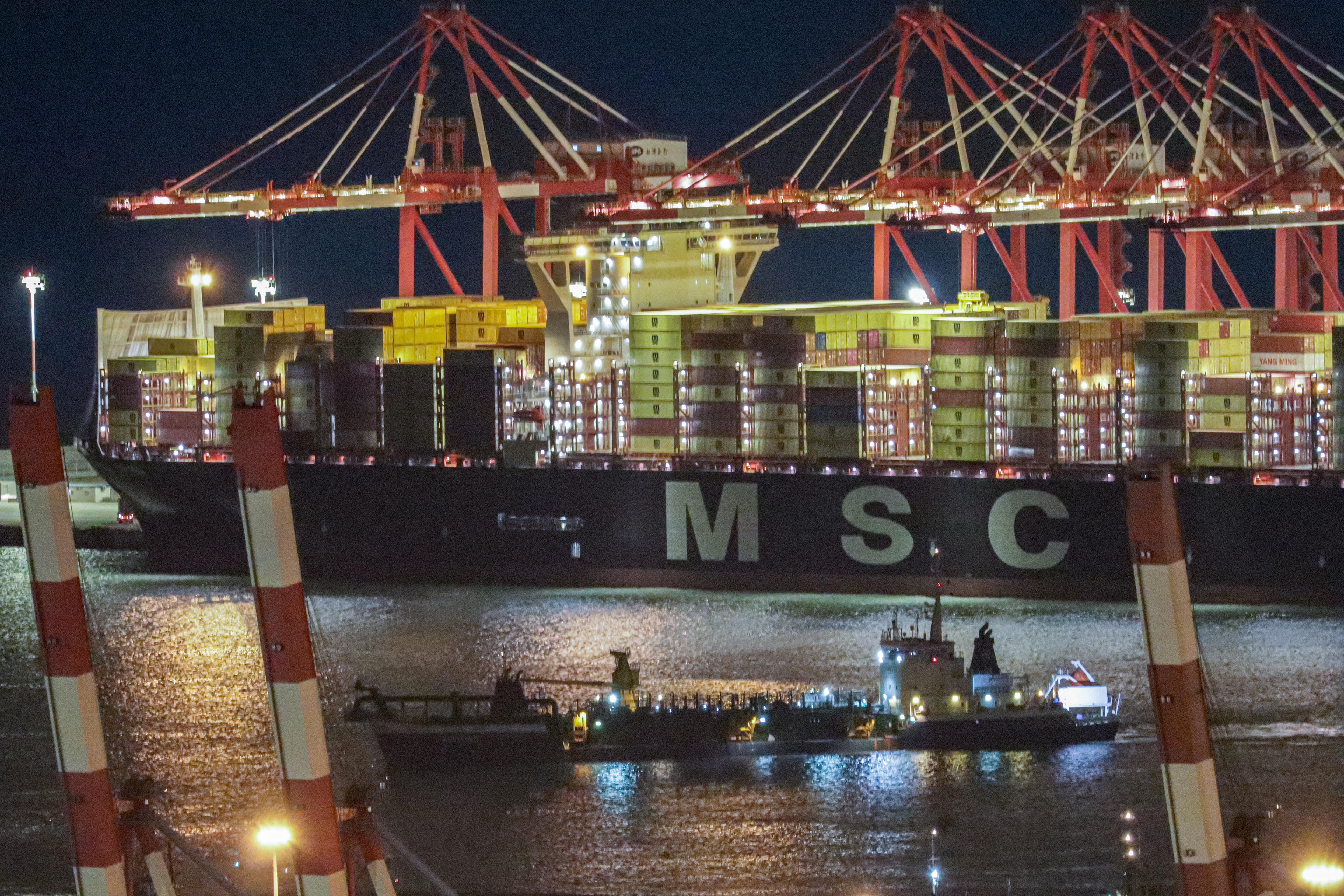
Now the part that really matters here is how absurd the shooting conditions are. This was handheld, at 400mm on an APS-C body, which means an effective field of view closer to 640mm, shot from roughly 1.5 kilometers away, at night, at f/8, 1/20s, ISO 12,800. On paper, this setup reads like a checklist of reasons not to even try. And yet the image holds together. The Canon R100 sensor, which is often dismissed as entry-level, manages to keep noise structured rather than smeared, letting fine details in the container stacks remain legible. You can still read the geometry of the ship, the spacing between containers, the separation between hull, deck, and superstructure. That’s not trivial at this ISO, especially with such heavy cropping pressure implied by distance alone.
The Canon RF 100–400mm f/5.6–8 IS USM deserves real credit here. At 400mm and wide open at f/8, it’s not pretending to be a fast lens, but paired with effective image stabilization it makes shots like this possible at all. Handholding 1/20s at an effective 640mm equivalent borders on reckless in the best way, yet the result shows controlled blur rather than outright failure. The ship is sharp enough where it counts, the lights don’t explode into unmanageable halos, and motion is rendered with restraint. Even the water texture retains some structure, which says a lot about stabilization doing its job while you kept your stance steady enough to let it work.
What I like most is that this image quietly proves a point about modern gear. You don’t need a flagship body or exotic glass to document scenes that feel physically unreachable. A lightweight telephoto zoom and a modest mirrorless body can pull industrial night scenes across kilometers and bring them back with credibility. This is the kind of photograph that lives at the intersection of patience, curiosity, and technical confidence, where you trust your hands, your stabilization, and your sensor more than the spec sheet suggests you should. And honestly, that’s often where the most satisfying images come from.
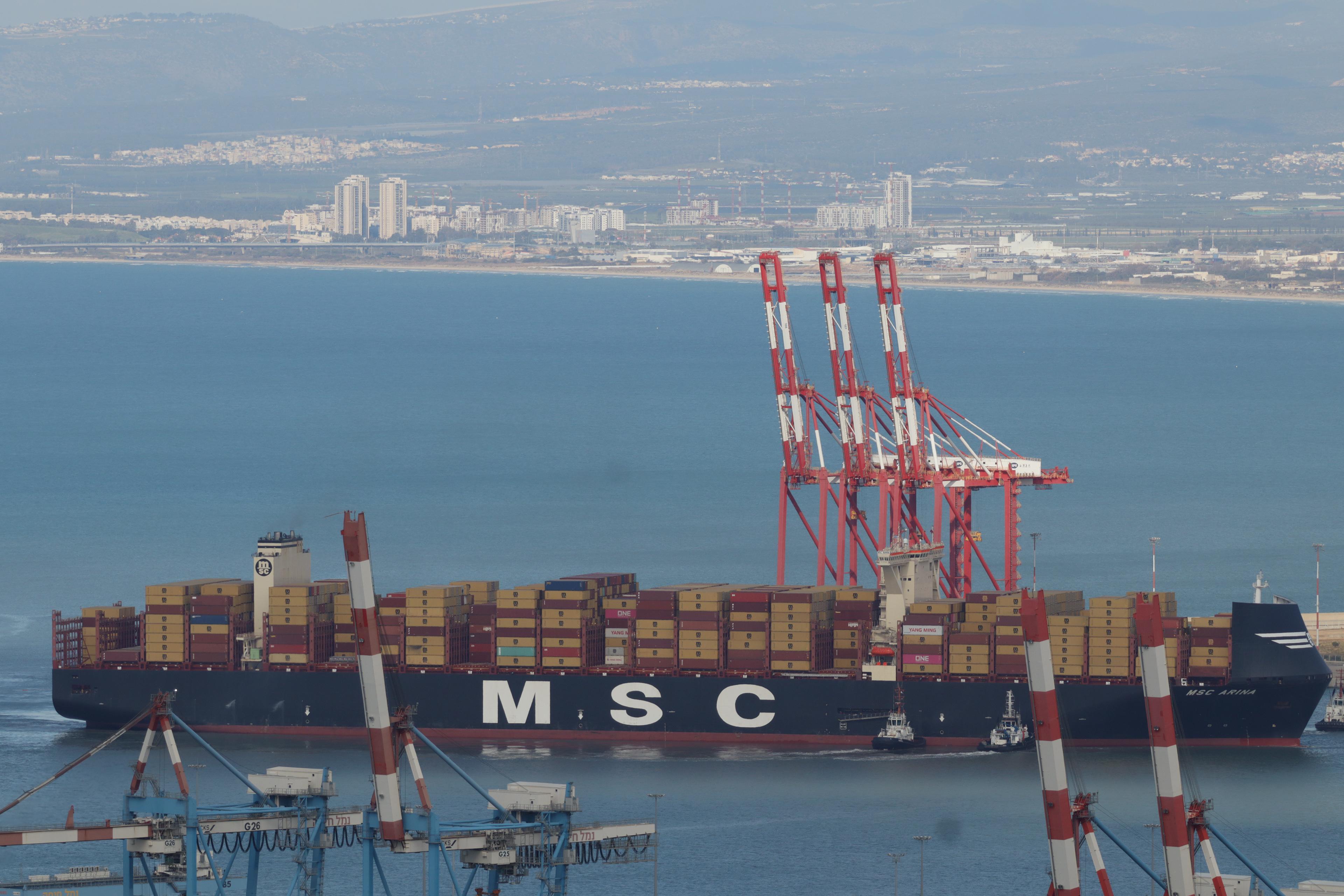
Shot with the same Canon R100 and RF 100–400mm combo from roughly the same 1.5 km distance, but this time in daylight, the difference is almost surgical in how it reveals what the setup is truly capable of when light stops being the limiting factor. The MSC vessel looks crisply carved out of the scene, every container edge clean, logos readable, and the layered stacks resolving into neat grids rather than blended blocks of color. The cranes behind it stand razor-straight, their red-and-white geometry popping against the calm blue water, while the distant coastline, industrial buildings, and faint hills compress beautifully into a dense, readable backdrop. There’s a real sense of optical discipline here: no mushiness, no nervous sharpening artifacts, just straightforward sharpness across the frame that feels confident rather than forced. It quietly confirms that the night shot wasn’t luck or tolerance—it was this budget combo being pushed to its edge in the dark, and then, in daylight, showing how much headroom it actually has when conditions turn friendly.