Long Reach, Light Weight: Discovering the Power of the Canon RF 100-400mm on a Canon R100
A camera setup does not have to be large, expensive, or intimidating to produce images with serious reach. Sometimes the magic comes from a combination that on paper looks modest but in practice delivers a surprisingly powerful result. Pairing the Canon RF 100–400mm F5.6–8 IS USM with the compact Canon R100 is one of those combinations. Mounted on the APS-C sensor of the R100, the lens effectively stretches into a field of view equivalent to roughly 160–640mm, turning an affordable telephoto zoom into something that suddenly feels like a serious long-range observation tool.
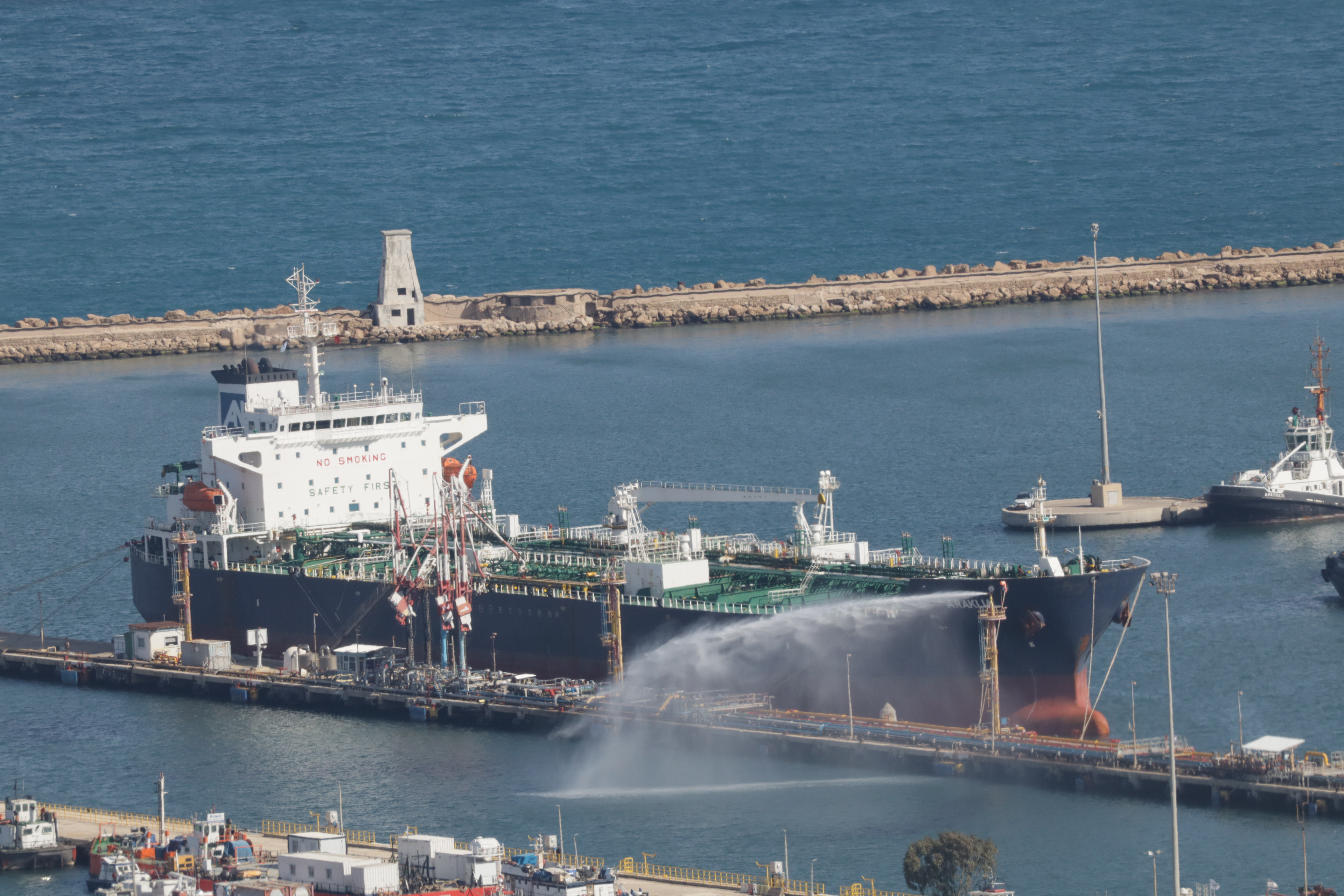
The photograph captures a large tanker moored at a fuel jetty, an industrial scene that would normally require either physical proximity or serious focal length. The ship dominates the middle of the frame with its deep blue hull and massive white superstructure, while the jetty infrastructure runs horizontally across the foreground like a mechanical spine feeding the vessel. Pipes, loading arms, cranes, and safety towers form a dense network of industrial geometry. A powerful stream of water arcs from a fire monitor across the pier, its spray forming a bright misty plume against the darker hull of the ship. It is a moment that feels almost cinematic, as if the port itself is rehearsing a safety drill.
What makes the image interesting from a photographic standpoint is the compression created by the long focal length. The breakwater in the background appears closer than it actually is, flattening the layers of the harbor into a compact visual arrangement. A small lighthouse-like structure stands on the breakwater, giving scale to the vastness of the ship below it. The calm blue water of the harbor contrasts with the industrial complexity of the tanker and terminal equipment, while the telephoto perspective isolates the scene in a way that a wider lens never could.
This is exactly where the RF 100–400mm shines on a crop body. The lens is relatively small, extremely light for its focal range, and stabilized well enough to shoot handheld even at the long end. On the R100, the extra reach turns everyday harbor scenes, wildlife, distant architecture, or even street moments across a plaza into viable subjects. You begin noticing details that would normally be lost to distance: markings on hulls, cranes operating far away, people working on decks hundreds of meters from where you stand.
Another pleasant surprise is the sharpness. Even toward the longer end of the zoom, the lens delivers crisp detail across the frame. The tanker’s bridge windows, the lattice structure of the cranes, and the texture of the water spray all render with clarity. For a lens that is often considered a budget telephoto in the RF lineup, the optical performance feels far more serious than its price might suggest.
The compactness of the setup also changes how you shoot. A heavy professional super-telephoto tends to demand planning, tripods, and a deliberate shooting style. The RF 100–400mm on the R100, on the other hand, encourages exploration. You walk, you stop, you zoom in on something interesting across the harbor, you move again. It becomes more like carrying binoculars that happen to capture photographs.
Scenes like this tanker operation show why long lenses are addictive. They reveal the hidden theater of distant activity: ships docking, cranes moving containers, pilots boarding vessels, harbor tugs circling like small but determined insects around giants of steel. A photographer standing far away can suddenly bring that world close.
The result is an image that feels intimate despite the physical distance. The spray of water, the scale of the hull, the intricate machinery of the jetty, and the quiet presence of the breakwater all come together in a compressed harbor landscape that feels both industrial and strangely calm. With the RF 100–400mm mounted on a crop body like the Canon R100, that distant world becomes accessible in a way that is both practical and surprisingly elegant.