The Camera on Your Hip Is Louder Than You Think
That easy, ready-at-the-hip carry feels right at first. The camera sits there like it belongs, part of your movement, always within reach. You convince yourself it’s low-key, almost invisible—no strap across the chest, no obvious “photographer” posture. Just a body, a lens, and the street. But spend enough time actually walking through busy places like that and something becomes clear, a bit uncomfortably so: it attracts attention. More than you expect.
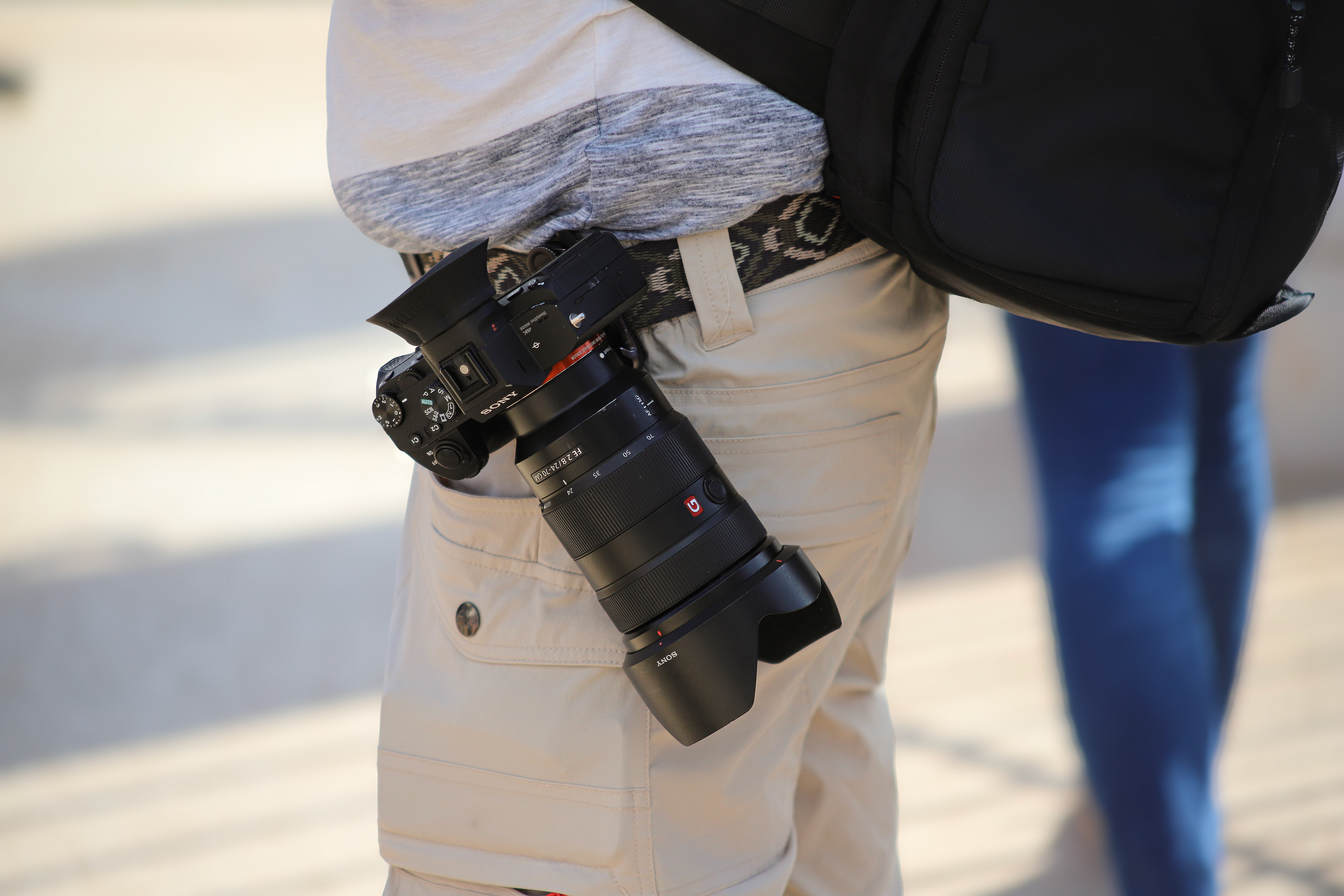
The shape alone gives it away. A camera sticking out from your hip, especially with a mid-sized lens and a hood, breaks the human silhouette. People notice shapes before they notice details. That extra protrusion—rigid, mechanical, slightly glossy—doesn’t blend with clothing. It signals “object,” and then very quickly, “camera.” You might feel casual carrying it, but from the outside, it reads differently. It reads deliberate.
There’s also movement. As you walk, the camera shifts, swings a little, catches light at odd angles. That motion pulls the eye. A strap across the shoulder at least stabilizes the gear; a bag hides it completely. But the hip carry sits in between—visible and dynamic. It doesn’t disappear into the background, it keeps reintroducing itself with every step. You notice it less because it’s yours. Others notice it more because it’s not theirs.
In crowded streets, that changes interactions in small ways. People glance a second longer. Some subtly adjust their behavior. Others just register you as “the one with the camera.” Not hostile, not even always conscious, but enough to shift the atmosphere. And if you’re traveling, especially in places where cameras already stand out, that extra visibility can tip you from observer into subject.
There’s a practical side too, and it’s not always flattering. A camera on the hip is exposed—easy to bump, easy to grab, easy to draw curiosity. It sits right in that zone where hands, bags, and passing bodies collide. You feel it after a while, that slight tension, even if you don’t fully admit it. You start checking it more often. Adjusting it. Being aware of it. And that awareness creeps into how you move, how you shoot.
What’s interesting is that the very thing that makes this carry appealing—immediacy—also makes it conspicuous. Fast access often comes at the cost of discretion. You gain a fraction of a second when raising the camera, but you might lose something less measurable: the ability to fade into the scene.
So the camera on the hip isn’t neutral. It’s a choice with a tradeoff. It looks effortless, but it broadcasts presence. And depending on where you are, that presence can be the difference between capturing a moment and quietly changing it.
- street photography
- travel photography
- camera carry
- photography technique
- gear philosophy
- travel safety
- visual perception
- urban photography
- photography workflow
- candid photography