The Workhorse Refined: Sony FE 24–70mm f/2.8 GM II in Real Use
When Sony first launched the G Master series back in 2016, the 24–70mm f/2.8 sat right at the center of the promise—high-end optics for a system that was still proving itself. The original delivered, but over time it started to feel… heavy in more ways than one. As bodies slimmed down and sensors pushed into 30MP, 50MP, even 60MP territory, that first version began to show its age—not optically so much, but physically, ergonomically. A bit of a brick, honestly.
The Sony FE 24–70mm f/2.8 GM II is not a tweak. It’s a reset. Paired with something like an Alpha 7 IV or even the older but still very capable Alpha 7 III, this becomes one of those rare setups that just works across almost everything—travel, street, events, even a bit of product or close-up work without switching lenses every five minutes. It’s the kind of combination you reach for without thinking, which is probably the highest compliment.
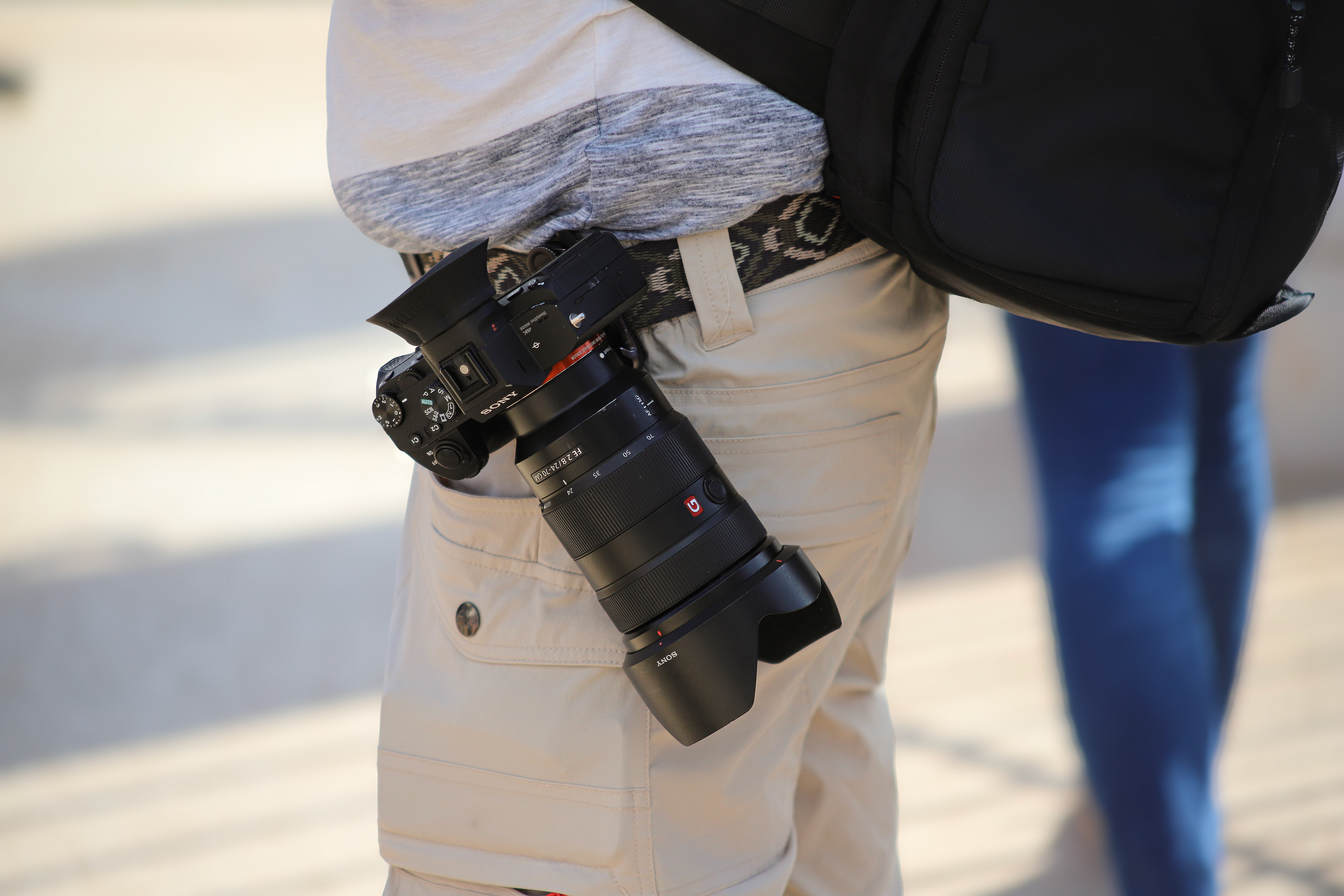
The first thing you notice is the weight—or rather, the lack of it compared to what came before. Dropping to around 695 grams and shaving off noticeable length changes how the camera sits in your hand. It finally feels balanced on the Alpha bodies instead of slightly tipping forward like it used to. Walking around with it for hours doesn’t feel like a commitment anymore. That alone changes how often you actually bring it with you, which, well, matters more than lab tests.
Handling is where Sony clearly paid attention this time. The aperture ring adds a layer of control that just feels right, especially if you move between stills and video. The option to de-click it is one of those small things that makes a big difference when you actually use it. The iris lock prevents accidental shifts—something that used to happen more often than people admit—and the zoom resistance switch is oddly satisfying. Tight when you want control, smooth when you want flow. It’s subtle, but you notice it.
Autofocus is, frankly, ridiculous in the best way. The four XD linear motors make focusing feel almost predictive. On something like the Alpha 7 IV, it locks instantly and tracks without hesitation. You stop thinking about focus altogether, which frees you up to actually look at the scene instead of the settings. It’s one of those invisible upgrades—you don’t notice it working, but you definitely notice when it’s not there on other lenses.
Optically, this is where the lens quietly separates itself. The original was sharp, no question, but this version feels like it’s operating with extra headroom. Wide open at f/2.8, the frame holds together from center to corners in a way that feels closer to primes than zooms. You don’t hesitate to shoot it wide open anymore. On a 33MP sensor, it almost feels overbuilt, like it’s waiting for something even more demanding.
The close focusing distance—down to 21cm—adds a layer of versatility that sneaks up on you. It’s not macro, but it gets you close enough for details, textures, small objects, food, whatever you run into while traveling. You stop thinking “I wish I had another lens” quite as often. And that matters, especially when you’re trying to stay light.
Bokeh is cleaner, more controlled. The jump to 11 aperture blades keeps highlights round even as you stop down, which gives portraits and subject isolation a more polished feel. It’s not a portrait lens per se, but it holds its own surprisingly well when you need it to.
Then there’s the video side, which Sony clearly didn’t treat as an afterthought. Focus breathing is heavily reduced, and paired with breathing compensation on newer bodies, it’s almost a non-issue. Zooming while maintaining focus—something that used to feel risky—now works reliably enough to actually use in real scenarios. It’s not marketed as parfocal, but it behaves close enough that most people won’t care about the distinction.
All of this adds up to something simple: this lens removes friction. Less weight, faster response, better control, fewer compromises. You carry it more, you shoot more, you think less about the gear and more about the frame. And yeah, that’s kind of the point.
The only real caveat—and you can see it in the image—is that even in its slimmer form, it’s still visible. Still identifiable as “serious camera.” That lens hood, that profile, it draws a bit of attention. Not dramatic, but noticeable. If your goal is to disappear completely, this isn’t invisible gear. It sits in that middle space: capable, refined, but present.
Still, if you’re looking for one lens that can realistically handle most situations without feeling like a compromise, this is it. Not perfect—nothing is—but close enough that you stop chasing alternatives. And that’s a rare place to land.
- photography
- sony
- gmaster
- 24-70mm
- mirrorless
- travel photography
- street photography
- camera gear
- lens review
- alpha7iv