Why the Safest Travel Telephoto Lens Isn’t the Best One
There’s a persistent myth floating around photography circles that certain countries restrict or even prohibit long telephoto lenses, as if a 200–400mm suddenly turns you into a regulated category of traveler. After digging through actual field experience—especially forums where people report what really happens—the reality is much less dramatic and, in a way, more nuanced. No one is getting stopped at borders for carrying a long lens. No customs officer is measuring focal length and denying entry. That part simply doesn’t hold up.
What does happen is more subtle, and honestly more important. A large telephoto lens changes how you are perceived. It signals intent. It suggests distance, surveillance, professionalism, sometimes even journalism. And that perception—not the lens itself—is where friction begins.
Photographers traveling with 400mm, 500mm, even 600mm lenses consistently report the same thing: airports care about weight and size, not legality. Security scans the gear, maybe takes a closer look, and you move on. The bigger issue tends to be airline restrictions—carry-on limits, forced check-in attempts, the usual logistical headaches. Not a single credible pattern of lens-based bans emerges from real-world accounts.
But once you step outside the airport, the equation shifts. A large lens doesn’t go unnoticed. It draws attention—from people, from security, from anyone sensitive to cameras pointed in their direction. In certain regions, especially around infrastructure, ports, government buildings, or just dense urban environments, that attention can translate into questions, tension, or simply a change in how people behave around you. You stop being invisible.
And that’s the part that matters most for photography.
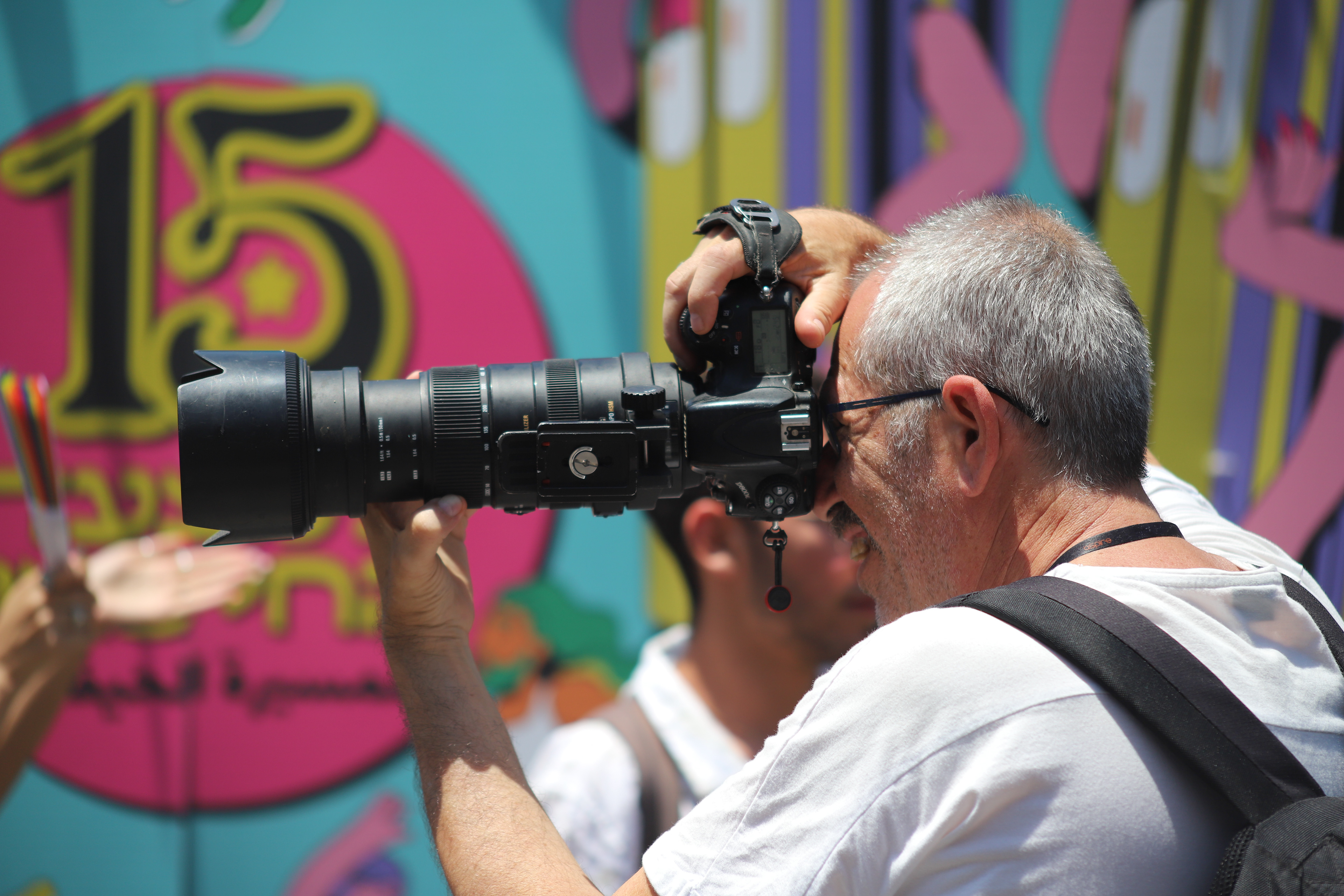
Big Lens, Immediate Attention
The frame is almost brutally simple in what it shows, and that’s exactly why it works. A photographer stands side-on, camera pressed to his eye, but your attention doesn’t go to him first—it goes straight to the lens. Long, extended, with a large hood, it projects outward like a physical signal. You notice it before anything else.
He’s holding it with both hands in that familiar, steady grip—left hand under the barrel, right hand on the body—completely absorbed in the act of shooting. But the irony is that while he’s focused on his subject, he has become one himself. The size of the lens makes that unavoidable.
The background is bright and busy, full of color and people, but it fades into secondary importance. The lens cuts through all of it. It’s not subtle, not something that blends into the scene. It’s the kind of setup that makes people aware they’re being photographed, even if they’re not the target.
And that’s the whole point in the context of travel and street work. This image shows what happens when gear crosses a certain threshold of visibility. It doesn’t matter what the photographer’s intention is—documentation, art, curiosity—the perception shifts instantly. A lens like this reads as serious, deliberate, and, in some environments, intrusive.
You can almost map the effect: heads turn, people notice, behavior changes. The natural flow of a scene gets interrupted, even slightly. That’s the cost of reach.
It’s a clean visual example of a simple idea: the bigger the lens, the harder it is to disappear.
Because photography—especially street and observational work—depends on a kind of natural flow. The moment people become aware of you in a certain way, the scene changes. You’re no longer documenting reality, you’re influencing it. A big white lens accelerates that effect dramatically.
That realization led me to a different approach. Instead of optimizing for maximum image quality in all situations, I started optimizing for something else: low visibility. Blending in. Reducing the signal.
For risk-sensitive travel, my answer has been unexpectedly simple—the Canon EF 75-300mm f/4-5.6.
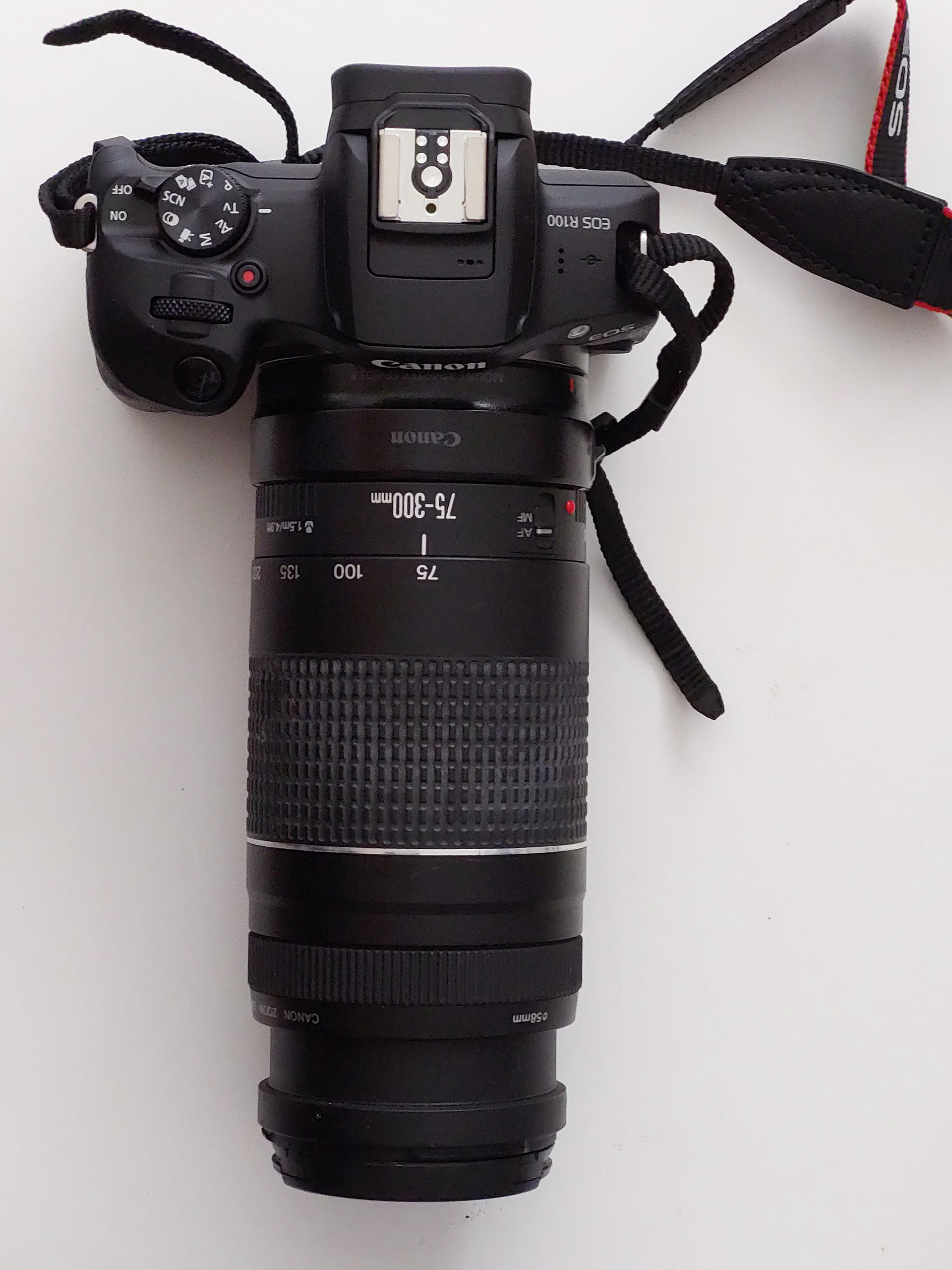
It’s not a lens people brag about. You can find it used for around $100. It’s not particularly sharp, especially at the long end. Autofocus is decent but not impressive. The build is light, almost forgettable. And that’s exactly the point. It doesn’t attract attention. It doesn’t look expensive. It doesn’t signal anything beyond “someone with a camera.”
And that changes everything.
Walking through a city with it, you don’t feel the same shift in atmosphere around you. People don’t react the same way. You’re not flagged mentally as press or surveillance. You’re just… there. Observing. And that gives you access to moments that would otherwise close off the second a larger lens enters the scene.
The 200–300mm range still gives you reach. You can stay across the street, frame through layers, compress space, isolate gestures without physically stepping into them. It’s a quiet kind of distance—functional without being theatrical. You can photograph without announcing that you are photographing.
Of course, there’s a trade-off. When you review the images later, you’ll see it. The edges aren’t critically sharp, contrast isn’t punchy, chromatic aberration sucks, and at 300mm there’s a softness that no amount of wishful thinking fully removes. But here’s the shift that happens over time: you stop comparing those images to what could have been shot under ideal conditions. You compare them to what would have been possible otherwise—which is often nothing.
A technically perfect image you never got is worth less than a slightly imperfect one you were able to take.
There’s also something else, a small side effect I didn’t expect. Using a lens like this forces a different kind of discipline. You compose more carefully. You anticipate more. You rely less on the lens to deliver and more on timing and positioning. It slows you down just enough to make you pay attention again.
So the conclusion, if there is one, isn’t about restrictions or rules. It’s about understanding how gear shapes your presence. No country is banning your 200–400mm lens. But in some places, that lens might quietly close doors you didn’t even realize were there.
And sometimes, the smartest move isn’t to bring the best tool.
It’s to bring the one that lets you stay unnoticed long enough to actually see.
- photography
- travel photography
- street photography
- gear
- canon
- telephoto lens
- minimalism
- field technique