The Ethics of Street Photography: Who Owns a Moment?
There is a photograph in my archive that I return to often. A couple on a city sidewalk, mid-kiss, oblivious to the crowd moving around them and entirely unaware of the lens pointed in their direction. The image is slightly soft — motion blur, ambient light, the natural disorder of a busy street — and that imperfection is part of what makes it work. It has the feel of something caught rather than constructed. A genuine moment, unrepeatable, belonging to no one and yet preserved now in a file on a hard drive somewhere, available for publication, for exhibition, for any use I choose to make of it.
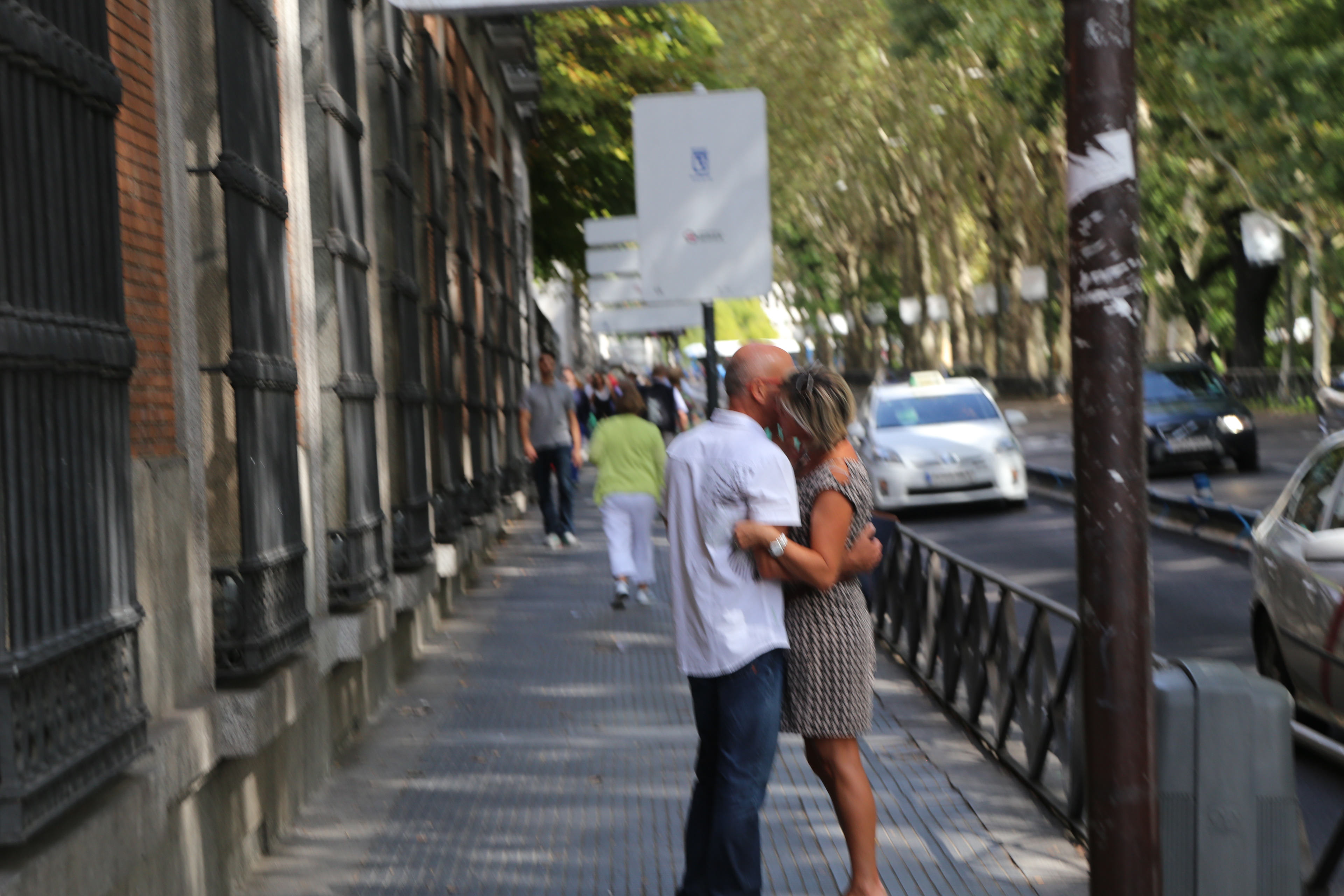
That last sentence is where the ethics begin.
The Legal Baseline and Why It Is Not Enough
Street photographers tend to retreat quickly to the legal argument when challenged. In most jurisdictions with robust free expression traditions — the United States, France, the United Kingdom, much of continental Europe — photographing people in public spaces is legal. You are in a public place. They are in a public place. No reasonable expectation of privacy attaches to conduct visible to passersby on a city boulevard. Case law, legal precedent, and common sense all tend to support the photographer’s right to shoot.
But legality is a floor, not a ceiling. The law tells you what you can do without facing prosecution. It says nothing about what you should do, nothing about the weight of the moment you are capturing and keeping, nothing about the asymmetry of the relationship between photographer and subject. Reducing photographic ethics to legal compliance is a category error — mistaking the minimum threshold for a complete moral framework.
The couple kissing on the pavement have not consented to being photographed. They have not consented to their image appearing on a photography blog, a stock site, a gallery wall, or a social media feed. They stepped outside and shared a private moment in a public space, which is something humans have always done. The street has always been a stage of sorts. But historically, a kiss on the pavement was witnessed by a few dozen passersby who would forget it within the hour. The camera changes that. It converts an ephemeral moment into a permanent artifact, one that can circulate indefinitely beyond any context the subjects might have anticipated or accepted.
What Street Photography Actually Is
Street photography is not surveillance. It is not voyeurism, though it can slide toward both if the practitioner is inattentive or dishonest about their intentions. At its best, it is a form of witness — an act of paying close attention to the social world, to the way human beings carry themselves through shared space, to moments of tenderness or absurdity or grief or grace that flare up and vanish in the flow of daily life.
The tradition is long and distinguished. Cartier-Bresson’s “decisive moment.” Vivian Maier’s decades-long, posthumously discovered archive of Chicago and New York street life. Gary Winogrand’s restless, tilted, kinetic vision of mid-century America. Helen Levitt’s children chalking the sidewalks of East Harlem. These photographers made images that constitute something like visual journalism about what it meant to be alive in their particular time and place. The fact that their subjects rarely consented, and often did not know they were being photographed, is inseparable from the work. The candid quality — the absence of performance, of self-consciousness, of the composed smile people put on when they know a camera is present — is precisely what gives the images their documentary and artistic power.
This matters because it complicates any blanket condemnation of unposed street photography. The argument that all candid photography without explicit consent is a violation fails to account for what would be lost if that rule were universally applied. A photography of public life in which every subject must first be approached, asked, and permitted becomes a photography of willing subjects — a different genre entirely, with different uses and different limitations.
Where the Real Tensions Live
The interesting ethical territory is not in the extremes. It is in the middle.
The extreme cases are easy enough. Photographing a stranger’s visible grief at a funeral to post online for engagement is exploitative and most photographers with any seriousness would refuse it. At the other end, photographing a public figure giving a speech in a town square raises no ethical concerns at all. The difficult cases are everything in between: the couple kissing, the homeless person sleeping in a doorway, the child mid-tantrum, the woman crying on a park bench, the argument at a café table. These are the images that make street photography interesting, and they are also the images most likely to cause harm if handled carelessly or published without reflection.
Several questions are worth asking before pressing the shutter, and again before publishing:
Is the subject in a position of vulnerability? There is a meaningful ethical difference between photographing a couple kissing and photographing someone in acute distress, someone incapacitated, or someone in a moment that, if circulated, could cause them professional, social, or personal damage. The former is a celebration of ordinary human warmth. The latter requires a much harder look at what the image is for and who it serves.
What is the image going to do in the world? A photograph exhibited in a gallery context, credited to a named photographer, presented as documentary or artistic work, exists differently than the same image stripped of context and deployed as a meme, as a joke, as an illustration for an article about some characteristic the subject happens to embody. Context is not a minor consideration. It is constitutive of what the image actually is.
Who benefits? The most honest question. If the answer is only the photographer — in reputation, in sales, in social media metrics — and the subject bears all the risk of exposure and any potential embarrassment or harm, the ethical calculus tips against publication. The best street photography serves a broader purpose: it documents, it illuminates, it generates empathy, it preserves. When the purpose is narrower — clout, content volume, filler — the case for using an unwitting subject’s image weakens considerably.
Would you show it to them? This is a useful heuristic. If you would be comfortable walking up to the subject after the fact, showing them the photograph, and explaining where you intend to publish it, the image is probably on solid ethical ground. If you would not — if the thought produces discomfort — that discomfort is worth examining rather than suppressing.
The Specific Case of Intimacy in Public
The kiss photograph is a particular type of image that deserves its own treatment, because it occupies an interesting borderline between the public and the private.
Public displays of affection are by definition public. The people kissing have chosen — consciously or not — to enact something intimate in a shared space. In that sense, the objection that the photographer is intruding on privacy is harder to sustain than it would be in, say, a photograph taken through a window. There is no reasonable expectation that a kiss on a busy city boulevard will go unobserved.
At the same time, there is something worth acknowledging in the difference between being observed and being recorded. The passerby who witnesses the kiss and continues walking has taken nothing. The photographer who frames, captures, and stores the image has made the moment into a thing — transferable, publishable, permanent. Whether that transformation is a violation depends on what happens next. Kept in a private archive, used in a context that treats the subjects with dignity, or presented as part of a body of work that genuinely engages with public life as a subject: these uses sit reasonably within the traditions of the form. Cropped to a thumbnail, captioned dismissively, used for commercial purposes without compensation: these uses deserve more scrutiny.
The technical quality of the image also speaks to something ethically relevant, though photographers rarely discuss it in these terms. A photograph made with care — in which the subject, even unknowing, is seen with attention and without contempt — is different from a photograph made carelessly or with malice. The ethical relationship between photographer and subject begins in the act of looking. How you look determines, in part, what the photograph does to the person in it.
The Emerging Pressures: Social Media and Facial Recognition
The ethical framework that developed around street photography in the twentieth century was built for a world of film prints, gallery exhibitions, and photobooks with limited circulation. That world is gone. An image posted to Instagram can reach millions within hours. Facial recognition technology means a candid photograph no longer necessarily protects the anonymity of its subject by virtue of being uncaptioned — the face itself can now be the identifier. A person photographed kissing on a street corner who would prefer their partner not know about it, who is navigating a complicated personal situation, whose employer might draw certain conclusions from the image — that person’s exposure is qualitatively different in 2026 than it was in 1976.
Street photographers working seriously today need to grapple with this shift rather than pretending the old frameworks still fully apply. The legal rights have not changed. The potential consequences for subjects have. That gap is where contemporary photographic ethics has the most work to do.
This does not mean abandoning candid street photography. It means practicing it with more explicit awareness of distribution, more care about what gets posted versus what stays in the archive, and more willingness to consider the subject as a person with interests that exist independently of the photographer’s creative vision.
A Practical Position
The ethics of street photography do not resolve into a simple rule. They resolve into a practice — a set of habits of attention, restraint, and honesty that develop over time and that are specific to the photographer’s context, platform, and intentions.
Some working principles:
Shoot openly where possible. Photographers who work in plain sight, making no effort to conceal the camera, operate in a different ethical register than those who use long lenses to photograph subjects from concealment. Openness does not require permission — the shot of the kissing couple may be equally candid whether the camera is visible or hidden — but it changes the nature of the act.
Be more selective about publication than about capture. The archive and the public-facing body of work are different things. Images that have value as personal documents or as part of a photographer’s ongoing observation of a place need not all be published. The question of what goes out into the world is worth asking separately from the question of what is worth capturing.
Give the image its context. A photograph without a caption, a title, or any framing information is more vulnerable to misuse — by you, by others. Naming the place, the circumstance, the intention of the project does not diminish the work. It situates it.
Accept that some people will object, and take objections seriously. Occasionally a subject will notice they have been photographed and ask that the image be deleted. There is no legal obligation to comply. But there are situations in which compliance is the right choice anyway — where the subject’s distress is genuine, where the photograph does not serve a purpose important enough to justify that distress, where the humane response is simply to delete and move on. The legal right to keep the image and the ethical choice to do so are not the same thing.
The photograph of the couple on the boulevard is a good image. It captures something real about public life, about the way people carry their private relationships into shared space, about the textures of a city street on an ordinary afternoon. Whether it is ethical depends not on the act of taking it — that is defensible — but on what comes after. That is where the photographer’s responsibility actually lives.