How to Shoot Informal Tech Events (Without Making Them Look Like Events)
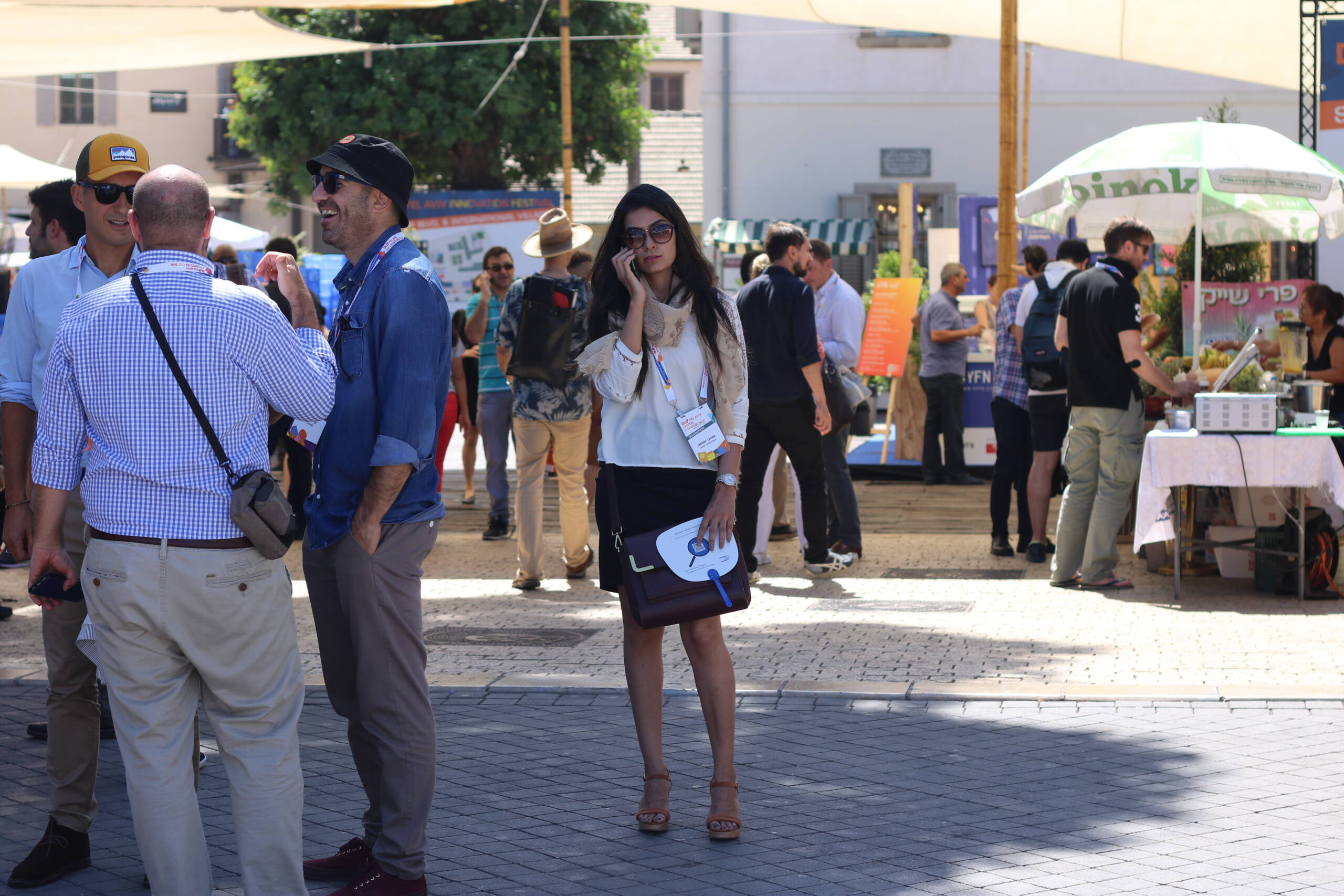
These photos tell you almost everything you need to know, if you pay attention to what they don’t do. Nobody is posing. Nobody is centered perfectly and smiling at the lens. People are mid-call, mid-step, mid-thought, holding drinks, checking phones, drifting in and out of conversations. In the first frame, the woman in sunglasses stands alone for a second, slightly off-balance in the composition, phone to her ear, badge hanging loosely, sunlight cutting across the pavement in irregular shapes. Around her, conversations overlap visually, bodies half-turned, laughter frozen without explanation. That’s exactly how an informal tech event feels when you’re actually there, and that’s the feeling you’re trying to preserve. The moment you try to “document” too hard, you lose it.
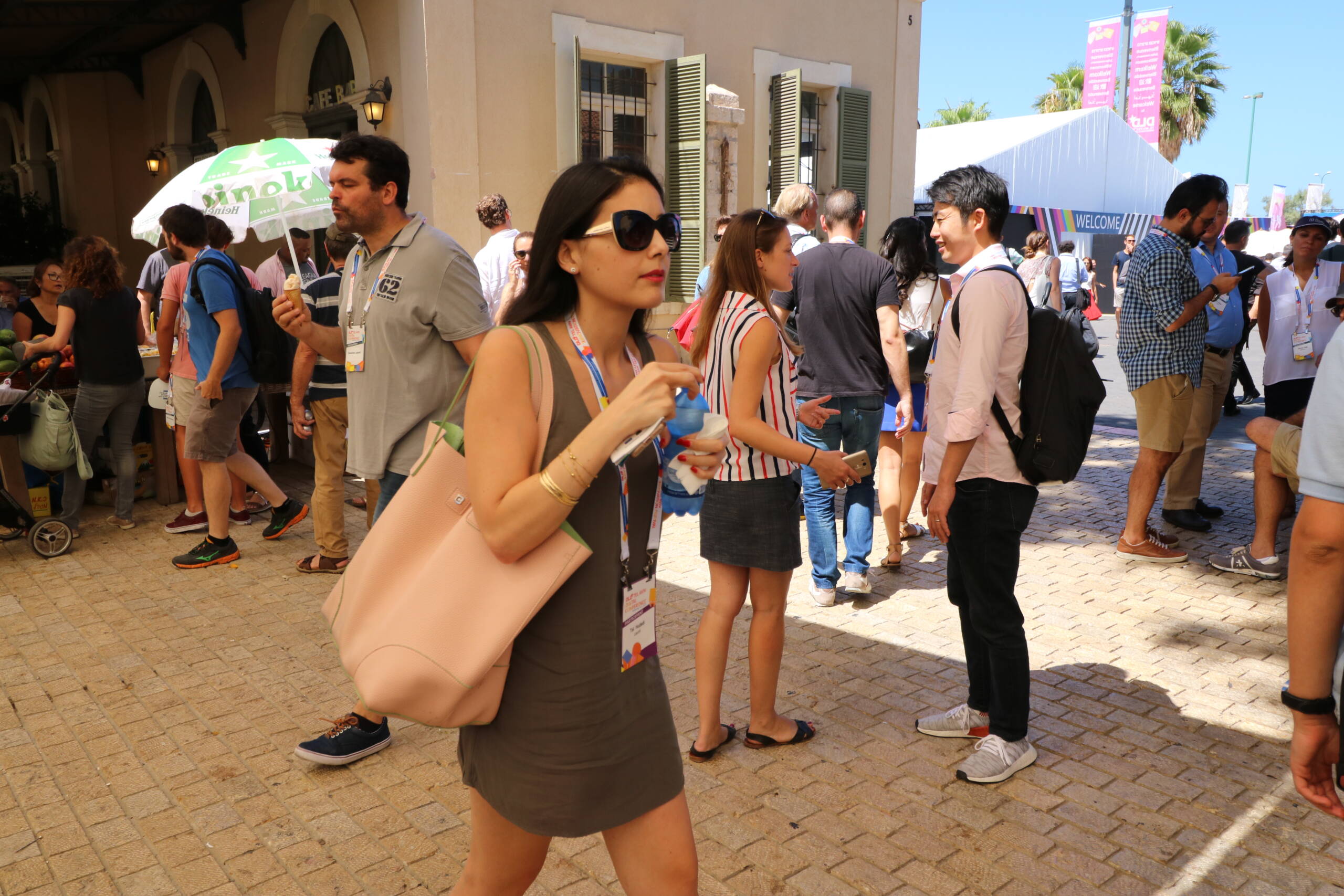
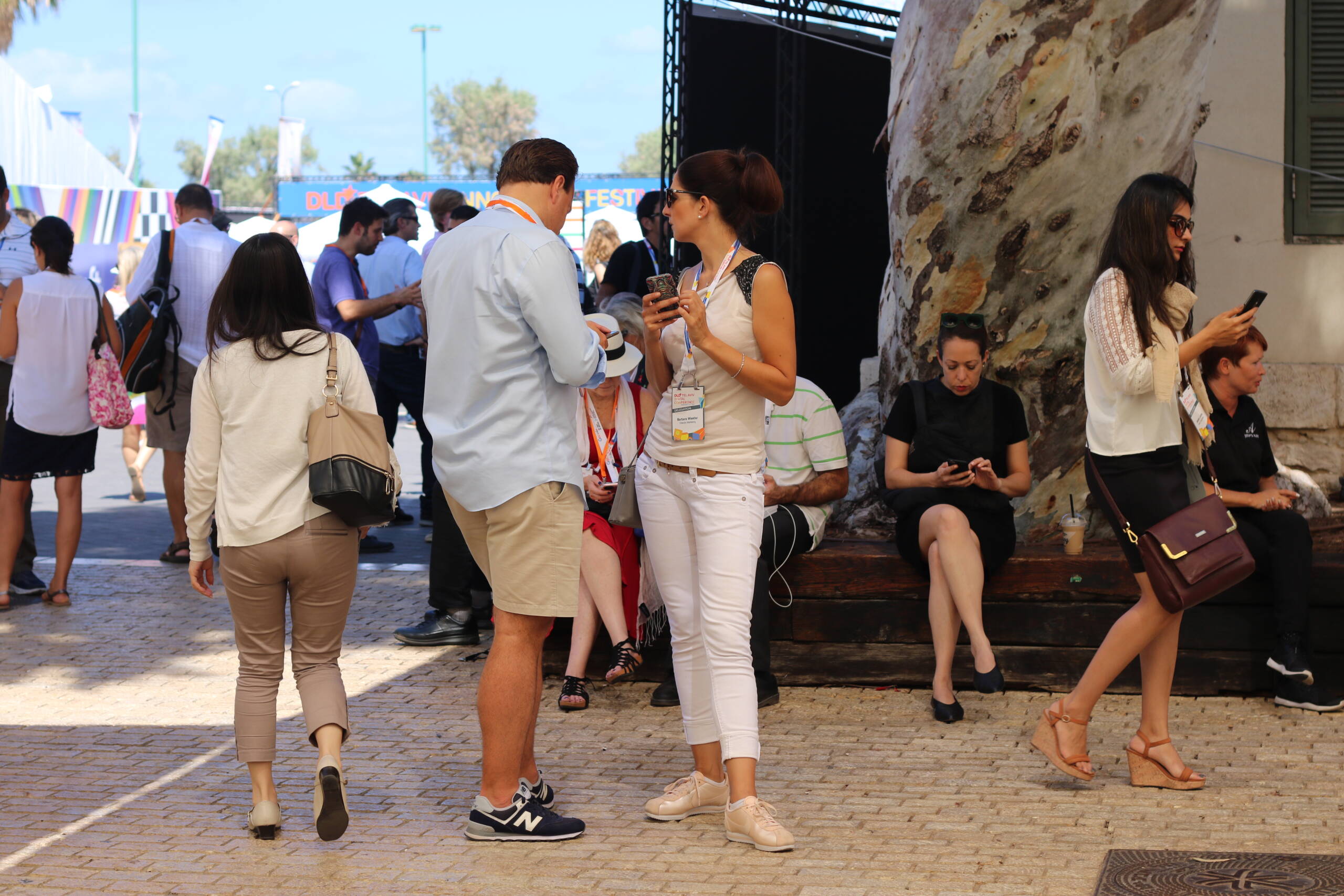
Shooting informal tech events starts with abandoning the idea that you’re covering a program. You’re not there to prove that talks happened or sponsors existed. You’re there to capture flow. Notice how in the second image people cluster naturally around a tree that doubles as seating. Some are standing, some scrolling, some waiting, some talking. Nobody looks busy for the camera, but everyone looks occupied with something real. As a photographer, your job is to hover just outside those micro-moments. Stay close enough that the scene feels intimate, far enough that nobody stiffens. A medium focal length works beautifully here because it mimics human distance; you’re not spying, you’re observing. If someone glances at you and immediately forgets you exist, you’re doing it right.
Light is doing quiet, heavy lifting in all three photos. Open shade from tents, trees, and buildings softens faces without flattening them. Hard sunlight is allowed to exist, but it’s broken up by shadows that add rhythm to the frame instead of washing it out. Don’t fight this. Informal events rarely have perfect light, and chasing perfection will push you into awkward angles and obvious staging. Let highlights clip a little. Let shadows fall where they may. These imperfections signal authenticity. When tech people see these images later, they recognize the day, not a sanitized version of it.
Composition should feel accidental, even when it isn’t. Look at how often subjects are placed slightly off-center, partially overlapped by others, or framed by movement. In the third image, a woman walks through the foreground sipping water, tote bag swinging, while behind her multiple conversations happen at different depths. This layered chaos is gold. Don’t simplify it too much. Resist the instinct to isolate every subject with shallow depth of field. Sometimes context matters more than faces. A badge half-visible, a food stand in the background, someone gesturing mid-sentence—these details anchor the image in a specific kind of event without ever spelling it out.
Phones deserve a special mention, because they’re everywhere and that’s fine. People checking messages, taking photos, reading emails—this is modern networking, not a distraction from it. Including phones in your frames actually makes the images more honest and more contemporary. The trick is timing. Catch the moment before or after the screen dominates the face. A glance up. A pause. Fingers still holding the device while attention shifts back to a person nearby. Those transitions are more interesting than the action itself.
Movement matters more than smiles. Informal tech events are about circulation: people arriving, leaving, crossing paths, looping back. Shoot people walking. Shoot backs as often as fronts. Shoot hands holding cups, feet stepping into light, bodies turning away mid-conversation. These gestures suggest openness and motion, which is exactly what these events aim to create socially. Static group shots feel like paperwork; motion feels like memory.
Finally, be patient and slightly lazy in the best possible way. Don’t chase every interaction. Pick a good spot where people naturally pass through and let scenes assemble themselves. Most of these photos feel calm because the photographer wasn’t frantic. You can sense that the camera waited for life to align rather than forcing it. Informal tech events reward photographers who slow down just enough to notice when something ordinary turns quietly meaningful. When viewers later say, “That’s exactly how it felt to be there,” that’s the highest compliment you can get—and it only happens when you stop trying to make the event look important and let it look real instead.
Upcoming tech events:
- Sonar Summit: A global conversation about building better software in the AI era, March 3, 2026
- Cybertech 2026: Proof That the Industry Is Finally Catching Up With Reality
- Chiplet Summit 2026, February 17–19, Santa Clara Convention Center, Santa Clara, California
- MIT Sloan CIO Symposium Innovation Showcase 2026, May 19, 2026, Cambridge, Massachusetts
- Humanoid Robot Forum 2026, June 22–25, Chicago
- Supercomputing Asia 2026, January 26–29, Osaka International Convention Center, Japan
- Chiplet Summit 2026, February 17–19, Santa Clara Convention Center, Santa Clara, California
- HumanX, 22–24 September 2026, Amsterdam
- CES 2026, January 7–10, Las Vegas
- Humanoids Summit Tokyo 2026, May 28–29, 2026, Takanawa Convention Center