Overhead Shooting: Getting the Angle Without a Ladder
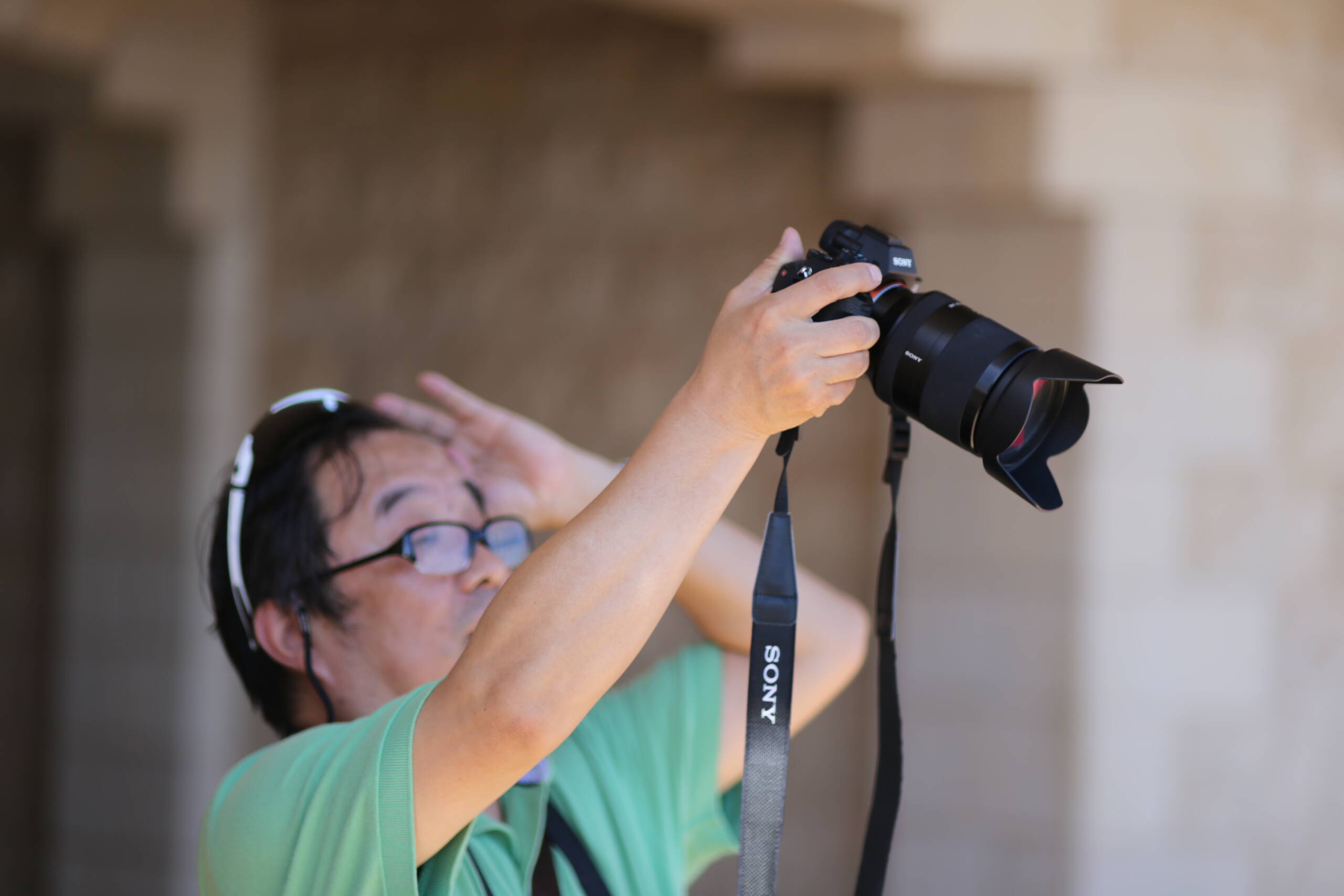
Some subjects simply don’t cooperate with eye level. Arches, coffered ceilings, hanging signage, and upper facade details all sit above the natural sightline of a standing photographer, and craning the neck back only gets you so far before the framing falls apart. The fix doesn’t require a ladder or a stepstool. It requires raising the camera itself.
Why Overhead Framing Works
A camera lifted above the head changes the geometry of the shot without changing your physical position. Instead of shooting up at a steep angle from chest height, which exaggerates convergence and distorts vertical lines, an overhead position flattens that angle. The result is a cleaner read on architectural detail, particularly on subjects like arches and vaulted ceilings where line integrity matters.
This is also the fastest way to clear foreground obstructions. Crowds, railings, planters, and other visitors are common problems at ground level in any built environment. Two extra feet of elevation from a raised arm is often enough to shoot clean over them.
Working Without a Viewfinder
The obvious tradeoff is that you lose the eye-level viewfinder. A few habits make this workable:
- Use a wide-to-normal focal length. Framing by feel is far more forgiving at 24-50mm than at longer lengths, where small position errors compound quickly.
- Rely on autofocus and a smaller aperture. Stopping down to f/8 or narrower extends depth of field and reduces the cost of a slightly imprecise focus point.
- Take multiple frames. Since you’re composing blind or by rough estimation, shoot several variations per position and sort afterward rather than trying to nail one perfect frame in the moment.
- Use articulating screens where available. A camera with a tilting or flip-up rear screen lets you glance up while the camera itself stays raised, closing most of the gap between overhead shooting and normal composed shooting.
When to Reach for This Technique
Overhead framing earns its place in a few recurring situations: covered walkways and colonnades where the ceiling structure is the actual subject, museum and gallery interiors where barriers keep you at a fixed distance from raised architectural elements, and any crowded public space where the only clean sightline is above the heads around you.
It won’t replace a proper tripod-and-remote setup for precision architectural work, but for a working photographer moving through a site in real time, it’s one of the more useful angles in the toolkit — no extra gear required, just a raised arm and a willingness to shoot on instinct.