Two-Camera Carry: Why Photographers Shoot with a Backup Body
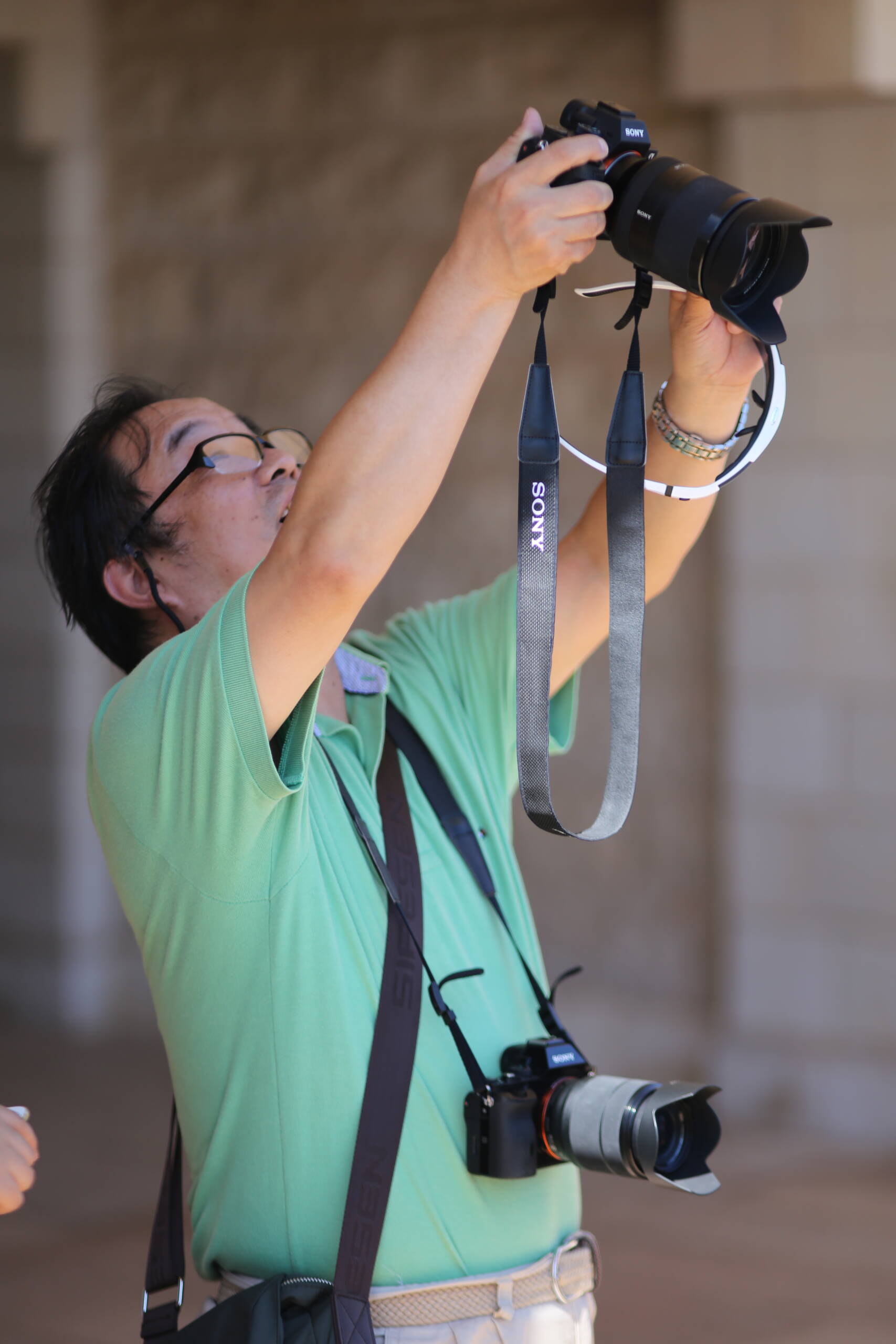
Carrying two camera bodies at once looks like overkill until the moment it isn’t. The setup shown here is a common one: two Sony bodies on separate straps, a longer lens raised overhead for a detail shot while a second body with a shorter lens rides on the chest, ready without a lens swap.
The Case for a Second Body
The most obvious reason is failure protection. A dropped body, a corrupted card, or a battery that dies mid-shoot doesn’t end the session if a second camera is already loaded and ready. For paid or one-time work — events, travel days that won’t repeat, anything with a hard deadline — that redundancy is the whole justification.
The less obvious reason is speed. Swapping lenses costs time and, more importantly, exposes the sensor to dust and weather. A two-body carry with a wide lens on one and a telephoto on the other means the shift from an environmental shot to a tight detail shot is a shoulder movement, not a lens change. In the frame here, the raised body is doing exactly that: pulling a tight, overhead angle on architectural detail while the second body stays loaded with a different focal length for whatever comes next.
What It Costs
None of this is free. Two bodies and two straps mean more weight, more strap tangle, and a more conspicuous setup in spaces where a lower profile is preferable. It also means twice the gear to keep charged, formatted, and insured. For casual shooting, a single body with a versatile zoom covers most needs without the overhead.
A Single-Body Alternative
Not every kit needs to double up. A Canon RF setup built around something like an R8 or R100 with one adaptable lens covers a wide range of situations on a single body, trading the redundancy and instant-switch speed of a two-camera carry for a lighter, simpler kit. The right choice comes down to what the shoot actually demands: paid, time-critical, high-consequence work leans toward the backup-body approach; personal or exploratory shooting usually doesn’t need it.
The two-camera carry isn’t a default. It’s a decision made when the cost of missing a shot outweighs the cost of carrying twice the gear.