Vertical Shots in Wedding Photography: When Portrait Orientation Tells a Better Story
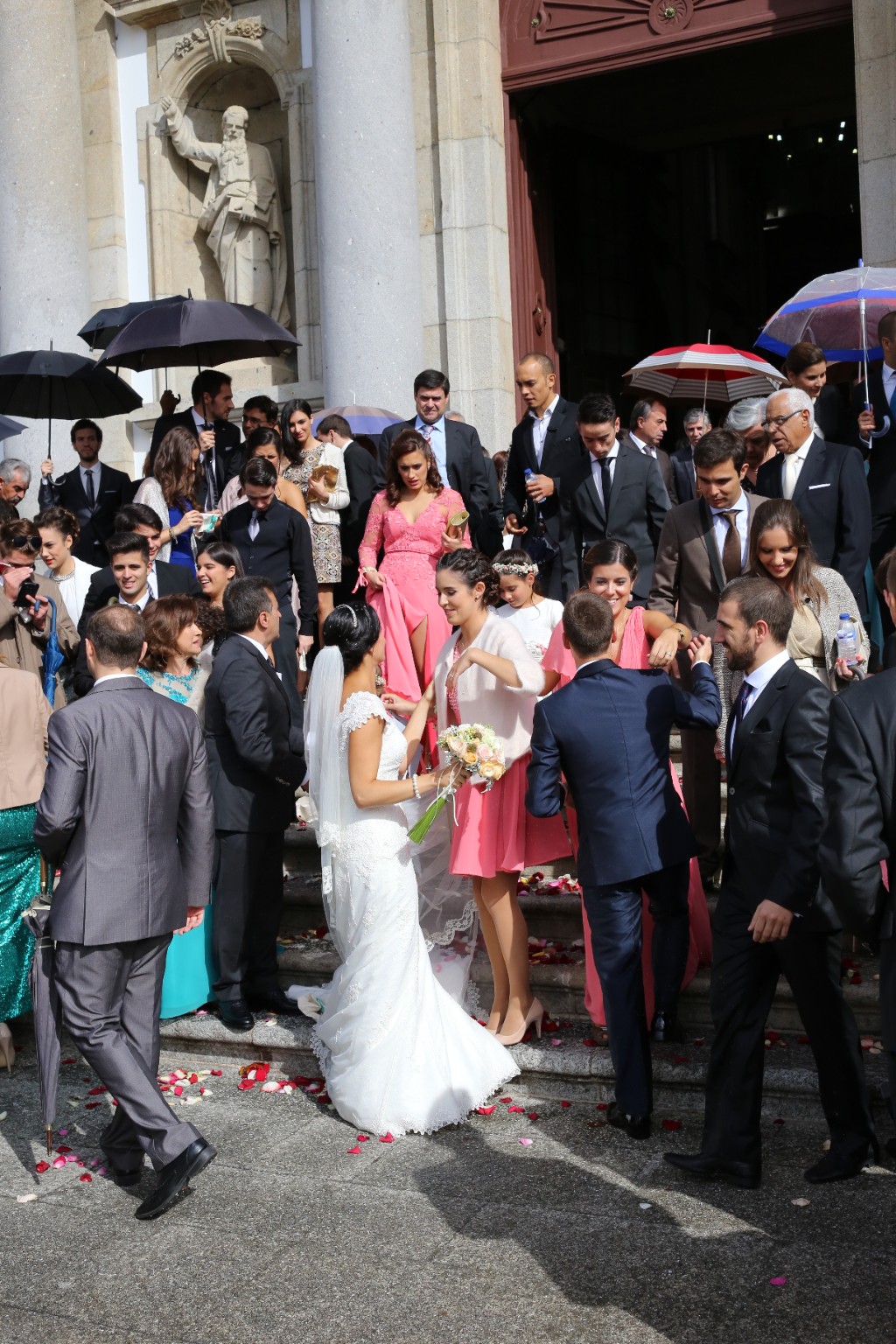
A wedding is full of vertical stories. The bride standing beneath a monumental doorway, guests descending a staircase, a veil falling toward the ground: these scenes often make more sense in portrait orientation than in landscape. Yet photographers sometimes turn their cameras vertically only for formal portraits, missing the possibilities of documentary wedding coverage.
This photograph shows why that is a missed opportunity. The bride in a white gown holds a bouquet of pale flowers near the foot of the stairs, surrounded by guests in dark suits and colorful dresses. A woman in pink descends behind her; umbrellas punctuate the crowd; rose petals scatter across the pavement. Above everything, stone columns, a carved figure and a deep entrance give the gathering a sense of place. The composition is busy, yes, but weddings are busy. The frame preserves that energy.
Portrait orientation helps connect three layers: the bride and her bouquet in the foreground, the moving guests in the middle, and the imposing architecture behind them. A horizontal crop could provide more elbow room, but it would sacrifice some of the height that makes the scene distinctive. Vertical composition is not simply a narrower view; it changes how the viewer reads the picture.
For wedding photographers, the practical trick is to watch the edges. Crowds create stray hands, half faces and unexpected overlaps. Leave enough room for the dress and veil, avoid cutting off meaningful gestures, and decide which person anchors the picture. In this example the bride supplies that anchor, while the surrounding guests provide the story. Strong sunlight creates bright whites and deep shadows, another reminder to protect highlight detail in the dress when exposing a scene like this.
Vertical frames work especially well on staircases, beneath tall arches, during entrances and exits, and whenever the relationship between people and their surroundings matters. Photograph the same moment horizontally when there is time, but do not assume the wider frame is automatically the safer choice. Sometimes a single upright image can hold the architecture, the celebration and the fleeting human moment together.
Photograph hosted by MediaGallery.org.