Shooting a Griffon Vulture From Behind: Why the Back View Beats the Portrait
The instinct with any big raptor is to get the face. Wait for the head-on stare, fill the frame with the beak, go home. That instinct throws away the best part of a griffon vulture, which is the back. Scapulars and wing coverts laid over each other like roof tiles, every feather a slightly different shade of sand and buff, the whole thing narrowing into near-black flight feathers at the bottom. A front-on portrait shows you a bald head and a hunched neck. The back shows you the bird.
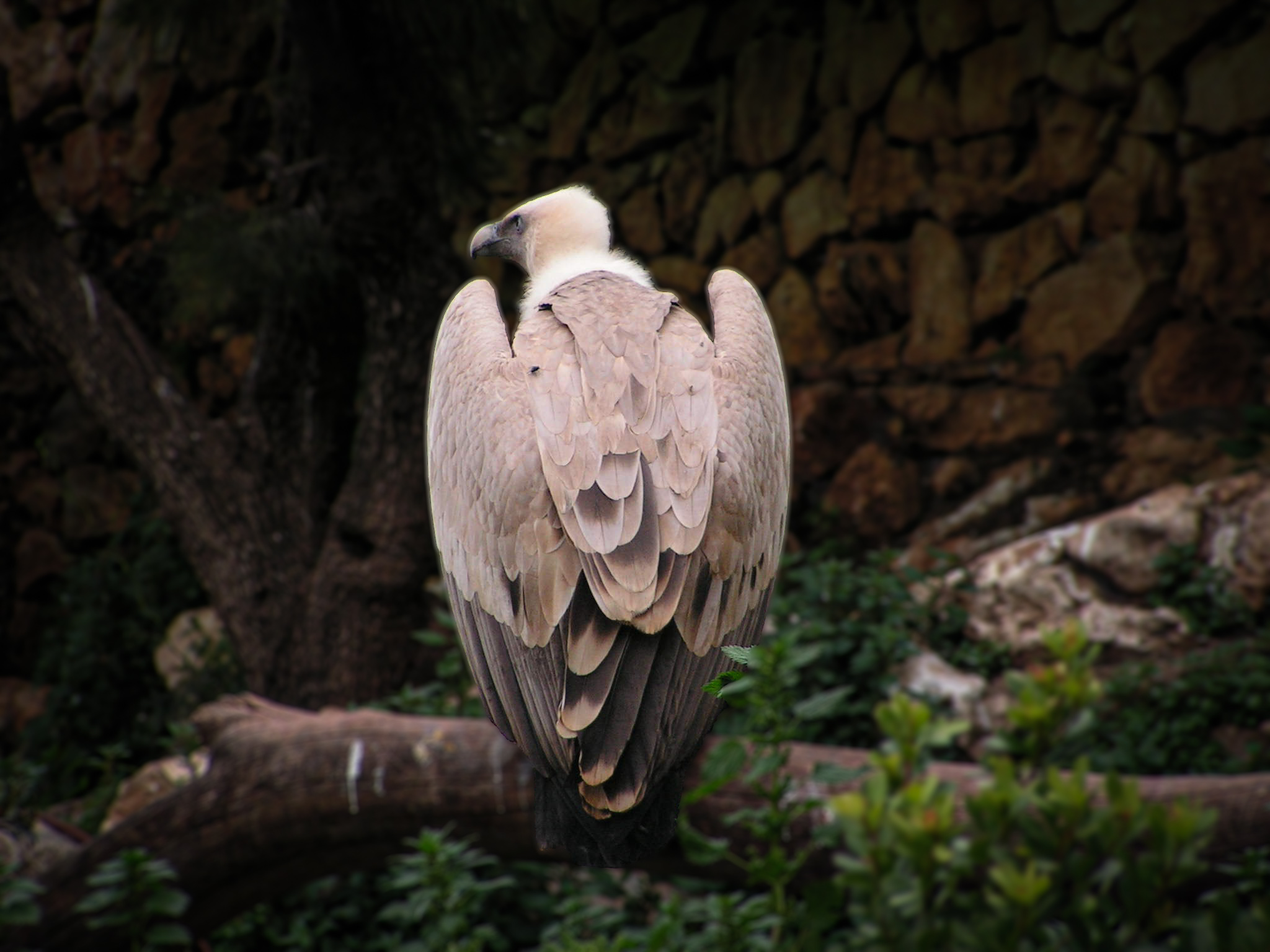
The frame works because of one thing the bird did: it turned its head. Straight back-on with the head forward would be an anatomy diagram. The profile turn gives you the beak outline, the eye, and the pale cream ruff against the darker mantle, and it puts a diagonal into an otherwise symmetrical shape. That turn lasts a second or two at a time. Everything else in this shot could be set up in advance. The head was the only thing worth waiting for.
Exposing for the head, not the scene
The head and neck ruff are the brightest object in the frame by a wide margin, and they are cream, not white, so there is very little room before they go flat and detailless. The background here is a shaded dry-stone wall sitting several stops down. Any average meter reading opens up the exposure to lift that wall and blows the head in the process.
Meter for the highlight instead. Spot the ruff, or use highlight-weighted metering if the body has it, and let the wall fall where it falls. Dark backgrounds are not a problem to be fixed. A dark background behind a pale bird is the single easiest separation you will ever get, and paying for it with a couple of stops of shadow detail on some rocks is a good trade.
The perch is doing half the work
The bird is on a fallen log with foliage below and stone behind, and none of that is accidental in a shot like this. A perched vulture at conversational distance is almost always a wildlife park, a rescue centre, or a feeding station, and there is no reason to pretend otherwise. What that gives you is time. You can walk the perch, find the angle where the background goes darkest and cleanest, and wait. The log reads as a natural line under the bird and the greenery keeps the bottom of the frame from turning into mush.
It also means you are not fighting for shutter speed. A still bird lets you drop to 1/250 or slower on a modest telephoto, which buys back the ISO you would otherwise burn, which is exactly how a cheap long lens stays usable on this kind of subject.
About the vignette
There is a heavy vignette on this edit and it was added, not captured. It pushes the corners down and pulls the eye onto the pale head, and on this frame it earns its place because the surroundings genuinely have nothing to offer.
The failure mode is obvious enough. Once you start darkening corners to hide clutter, you stop moving your feet to avoid clutter. Use it on the frames where the background is already close, not as a rescue tool on the ones where you got lazy.
Get the back. Wait for the head.