Below you will find pages that utilize the taxonomy term “low light”
Posts
Street Photography Dos and Don'ts: Shooting a Crowded Promenade With a Long Lens
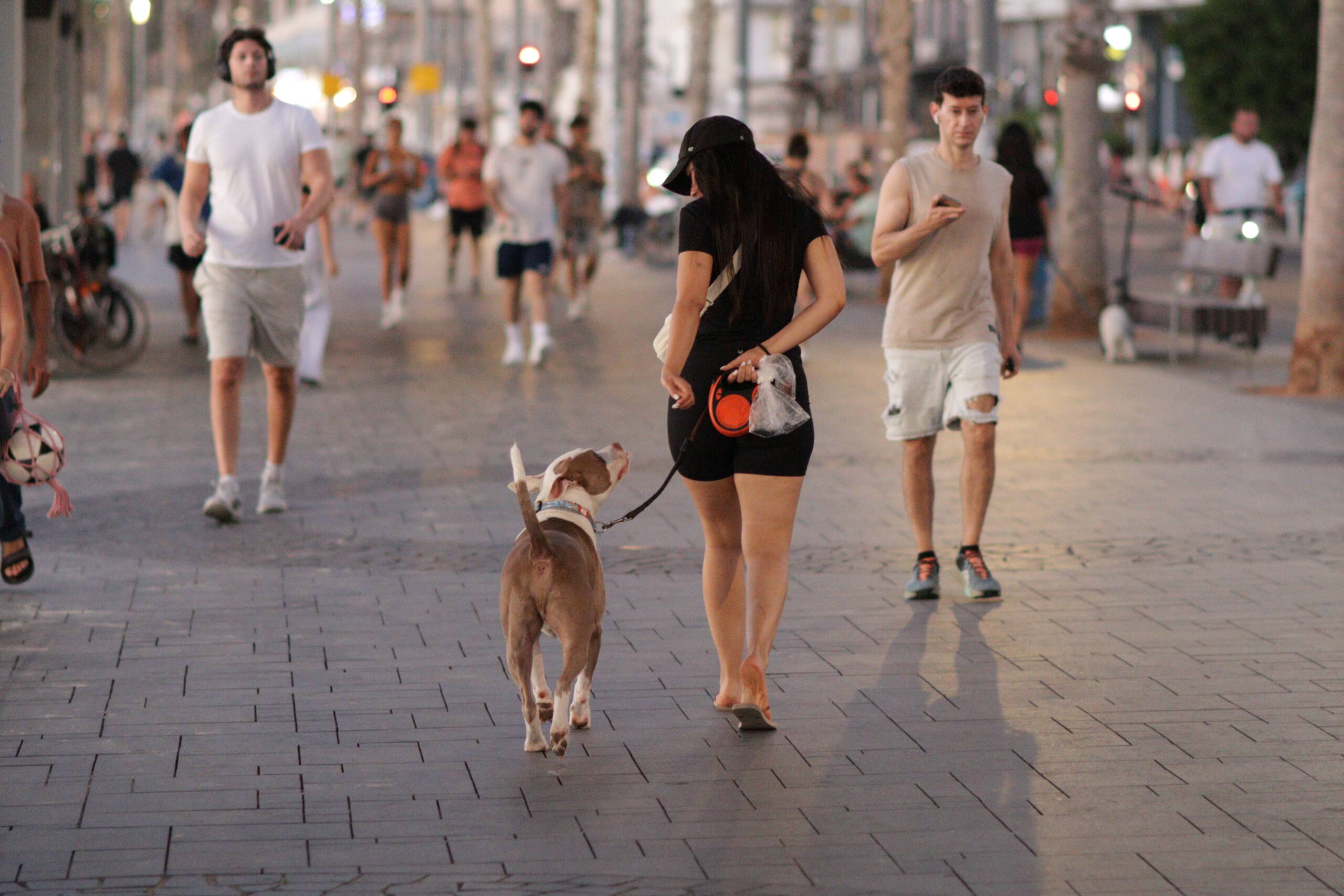
Most street photography advice assumes you’re standing close with a 35mm, waiting for someone to walk into a doorway of light. That’s one way to do it. The frame below is the other way: a short telephoto, wide open, shot down the length of a busy promenade at dusk, everyone moving, nobody posing, nobody aware.
The long-lens approach solves some problems and creates others. Here’s what it gets right, and where it goes wrong.
Posts
Shooting Wide Open at Night: Why a Fast Prime Beats a High ISO Body
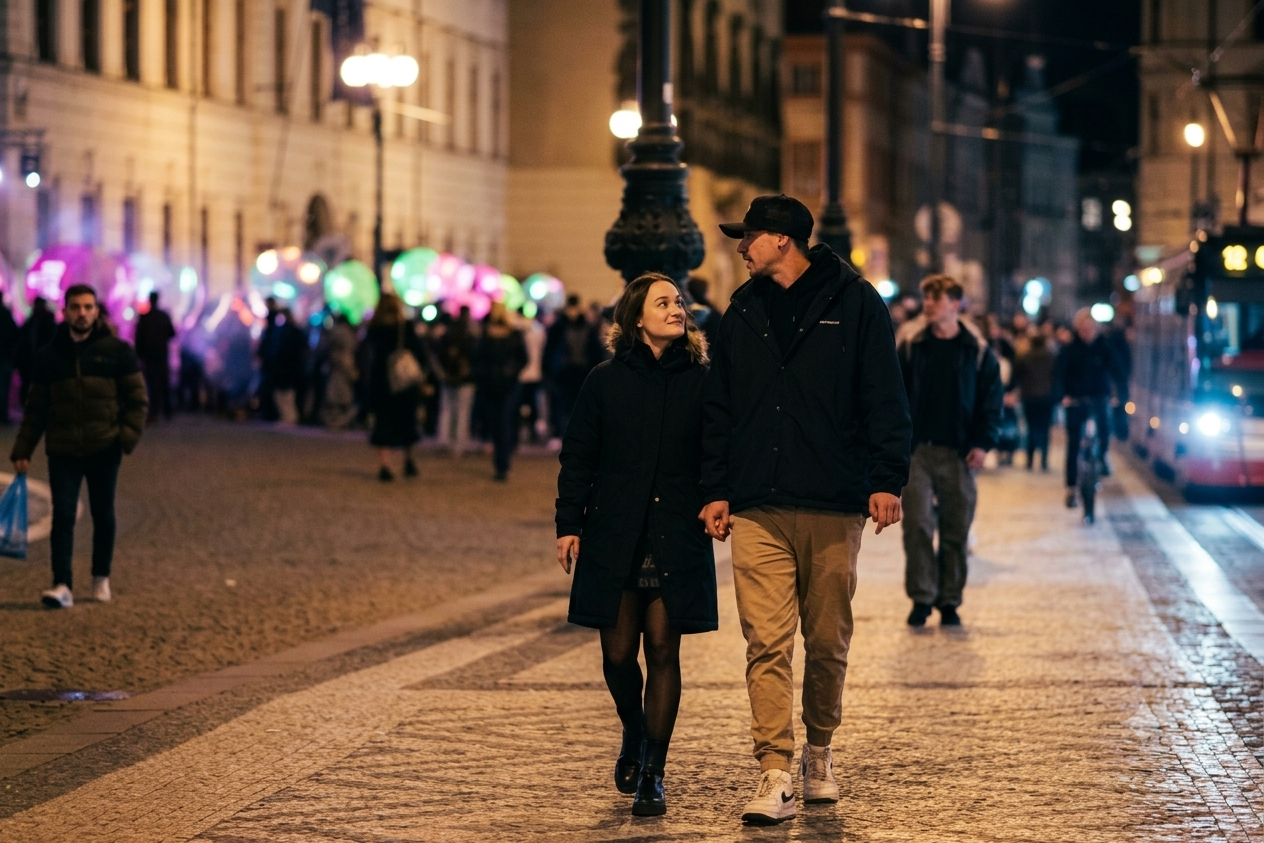
A couple walking down a cobbled city street after dark, sharp from the cap on his head to the stitching on her coat, with a crowd of thirty other people and a moving tram dissolved into soft colour behind them. Nothing in the background is legible. That is the point. The separation was not made in software, and it was not made by cranking the ISO.
The standard advice for night street work is to buy the body with the cleanest high ISO and shoot a modest zoom at f/4.
Posts
Theatre Light Is a Trap: Metering, Shutter Speed and Silent Mode for Stage Photography
Four dancers in saturated blue and red robes on a lit wooden stage, with everything below the stage edge falling away into an almost black auditorium of heads. The costume is the brightest thing in the frame by a wide margin, and it is the thing the camera’s meter will get wrong.
Stage lighting looks generous. There is a lit subject, there is contrast, there is colour. Every part of that is a problem in a different way, and the problems compound: the meter reads the wrong thing, the shutter speed you need is faster than the light supports, and the shutter mode that keeps you welcome in the room introduces artefacts of its own.
Posts
Shooting Through a Wet Train Window: Focus, Reflections, and the One Pass You Get
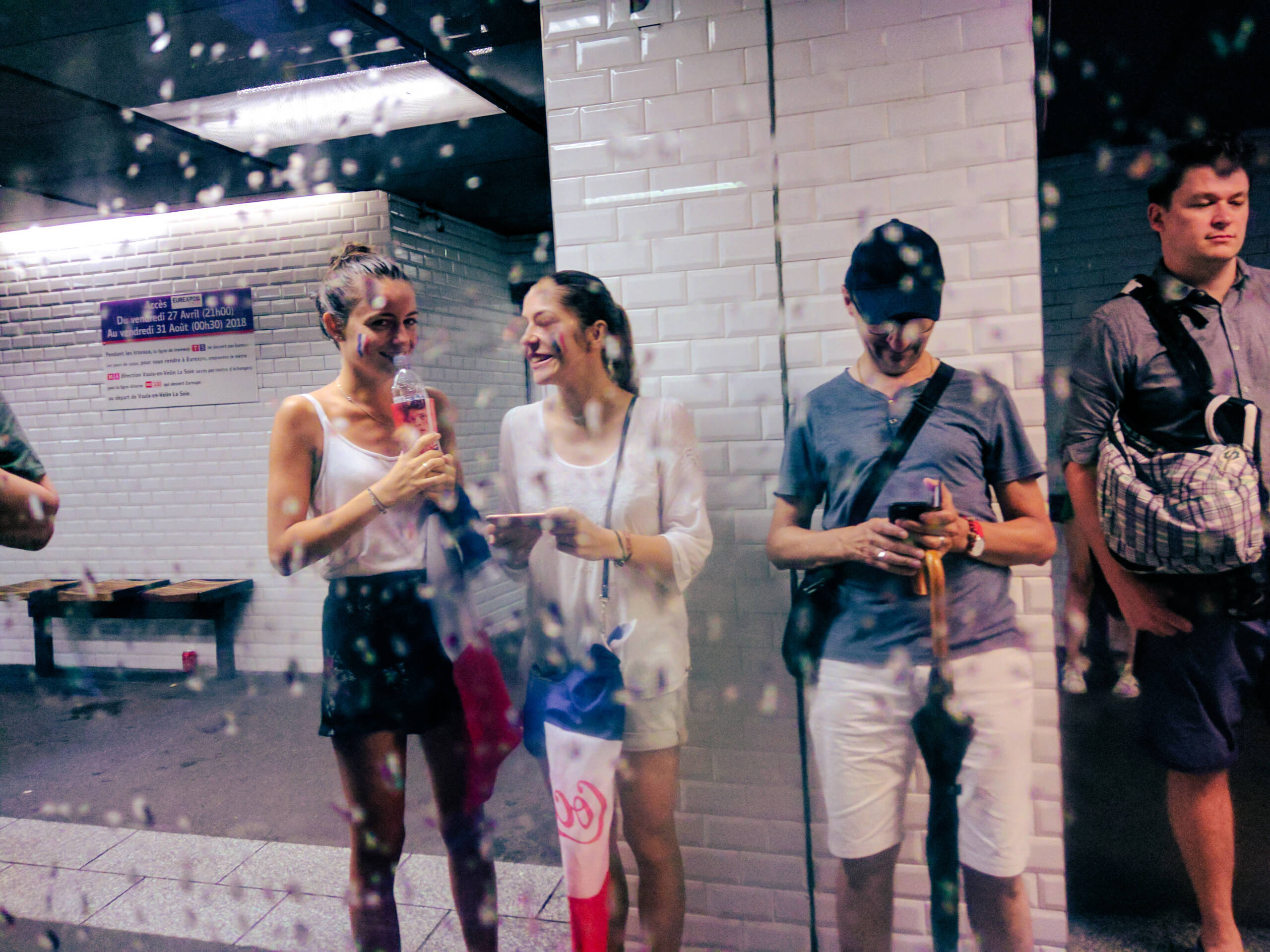
Lyon, 15 July 2018, early evening, a few hours after France won the World Cup final. The frame was taken from inside a carriage rolling into the station, through a window covered in water. Two women with tricolour paint on their cheeks and a flag rolled under an arm, a man in a cap on his phone, white bevelled tile, a notice about the Eurexpo access closure running to 31 August.
Posts
Shooting a Restaurant Open Kitchen in Mixed Light
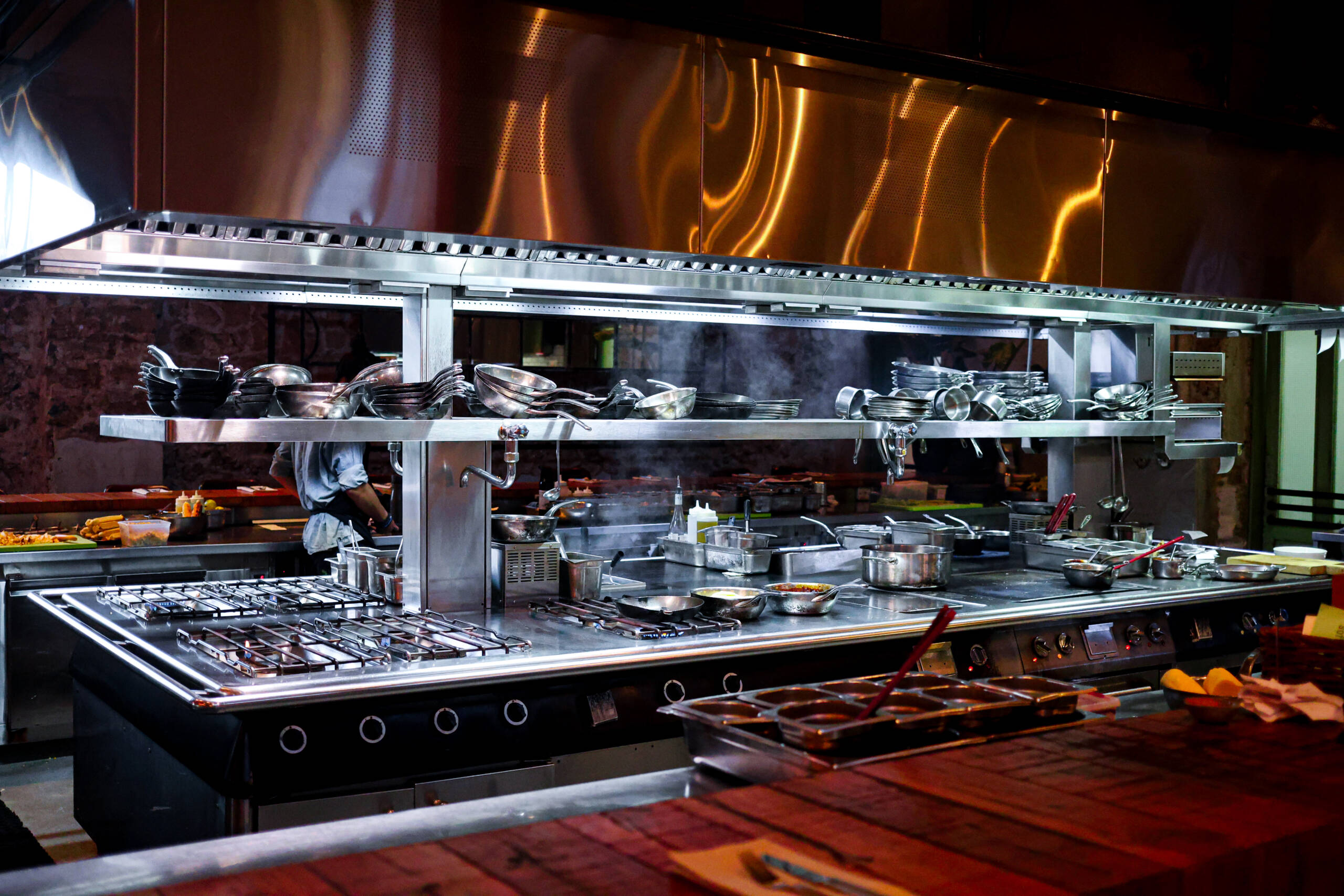
An open kitchen is one of the least cooperative environments you can point a camera at. The light source is whatever the restaurant installed for cooks, not photographers, and it rarely agrees with itself from one fixture to the next. In this frame the copper hood throws a warm, almost orange glow across the top third, while the stainless prep line below sits under a cooler, harder white. Shooting straight into that split without a plan produces a mess of clashing color temperatures.
Posts
Concert Photography on APS-C: Sigma 56mm f/1.4 DC DN Contemporary
Concert photography operates under specific constraints: low and rapidly changing light, a no-flash policy in most professional venues, a subject that moves unpredictably, and typically a three-song access window before photographers are removed from the pit. The Sigma 56mm f/1.4 DC DN Contemporary — available for Fuji X-mount and Sony APS-C — is a 84mm-equivalent fast prime at a price point that does not make pit photography financially precarious if something goes wrong.
Posts
Handheld at 1/4s: IBIS with the RF 15-35mm f/2.8L IS USM
The Canon R5 Mark II’s IBIS combined with the RF 15-35mm f/2.8L IS USM provides up to eight stops of combined stabilization according to Canon’s specification. In practice, on a full-frame sensor at 15mm, that means a stationary subject can be photographed sharp handheld at shutter speeds as slow as 1/4 second by a photographer who has learned to hold still. This is not theoretical. It works.
The technique is breath control and body mechanics.
Posts
Manual Focus at f/0.95: The NIKKOR Z 58mm Noct
The NIKKOR Z 58mm f/0.95 S Noct is a manual focus lens. Not manual-focus-by-default with an AF override — strictly manual, with no autofocus motor, by design. At f/0.95 on a full-frame sensor, the depth of field at a two-meter subject distance is approximately 1.5 centimeters. You are focusing by hand into a window of light that is smaller than the diameter of a fingernail. This is an exercise in discipline, not convenience.
Posts
Mastering Low-Light Photography: Capturing the Ambiance of a Dark Restaurant
Walking into a dimly lit restaurant, camera slung over my shoulder, I couldn’t help but feel both excitement and trepidation. Shooting in low light can be a tricky endeavor, but the character of a cozy, shadowy dining space is often where the most atmospheric photos come to life. The challenge, of course, is in capturing that ambience without letting the shadows swallow up your details or the warm, intimate light turn into a noisy mess of grain.